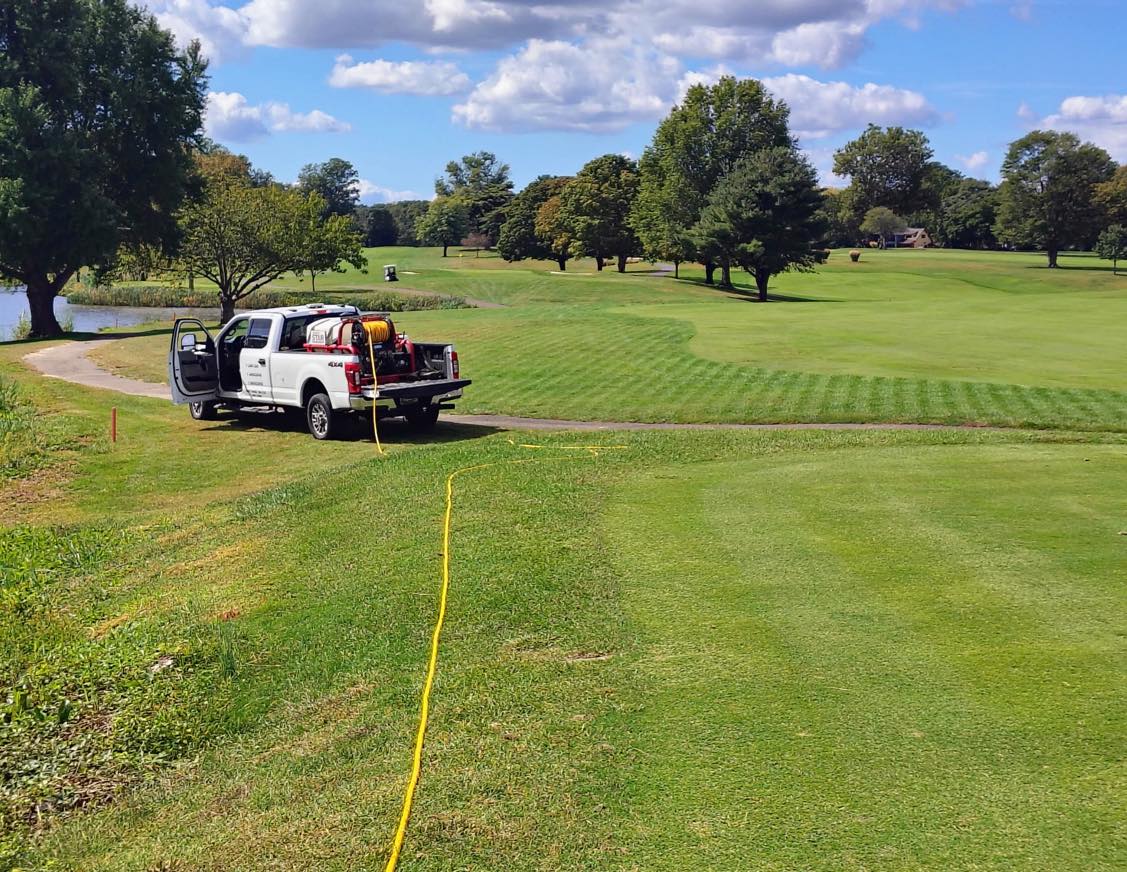
Stand on almost any golf course on the Eastern Shore and there is a pond in view, off the fairway with cattails along one edge. It looks like part of the course.
A lot of those ponds are stormwater ponds. When the course, the clubhouse and the parking lot went in, rain that used to soak into a field started running off grass, cart paths and pavement instead. The pond was dug to catch that water, hold it while the silt settles out, and let it go slowly through a pipe instead of all at once into the nearest ditch or creek. The pond is part of the drainage system, and it looks good while it does the work.
The same is true behind shopping centers, at the back of HOA neighborhoods, beside church parking lots and next to new barns and shops. And in all three states on the peninsula, keeping that pond working is the owner’s responsibility, per county regulations.
What a Stormwater Pond Does
Every stormwater pond has the same basic parts. Runoff comes in through an inlet pipe or a swale. Many ponds have a forebay, a smaller, shallower section near the inlet where the heaviest silt and sand drop out first. The main pool holds the water. A riser, a concrete or metal box with openings at set heights, controls how fast water leaves, and an outfall pipe carries it out through the embankment. The embankment itself is built-up fill that holds the whole thing in.
When those parts work, a heavy rain fills the pond, the water drains out over a day or two, and what goes downstream is slower and cleaner than what came in. When they stop working, the pond stops doing its job, even if it still looks like a pond.
What Goes Wrong With a Pond Over Time
None of this happens in a single season. It stacks up over years, which is why a pond that looked fine when the property was built can be out of compliance ten years later without anyone touching it.
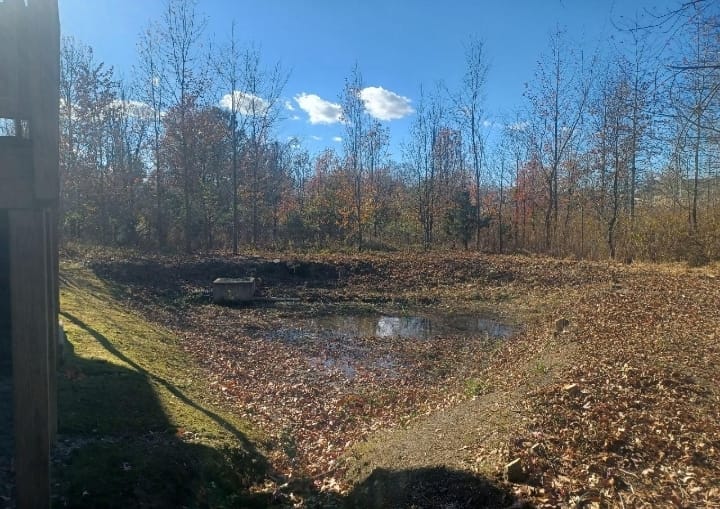
Silt fills it in. Every storm carries silt off the property, and the forebay and the bottom of the pond are where it ends up. A pond that has lost a foot or two of depth holds that much less water.
Trees take root on the embankment. Sweetgum, pine and red maple seed in on the banks within a few years of the last mowing. Their roots grow down into the embankment fill, and when a tree dies or blows over, the roots rot and leave paths for water to work through the fill.
The riser and pipes clog. Leaves, trash and branches pile up on the trash rack and in the riser openings. A clogged riser holds the water higher than it was designed for, and the pond overtops in a storm it should have handled.
The banks wash out. Where the grass thins or water comes in fast, the side slopes erode and the silt ends up back in the pond.
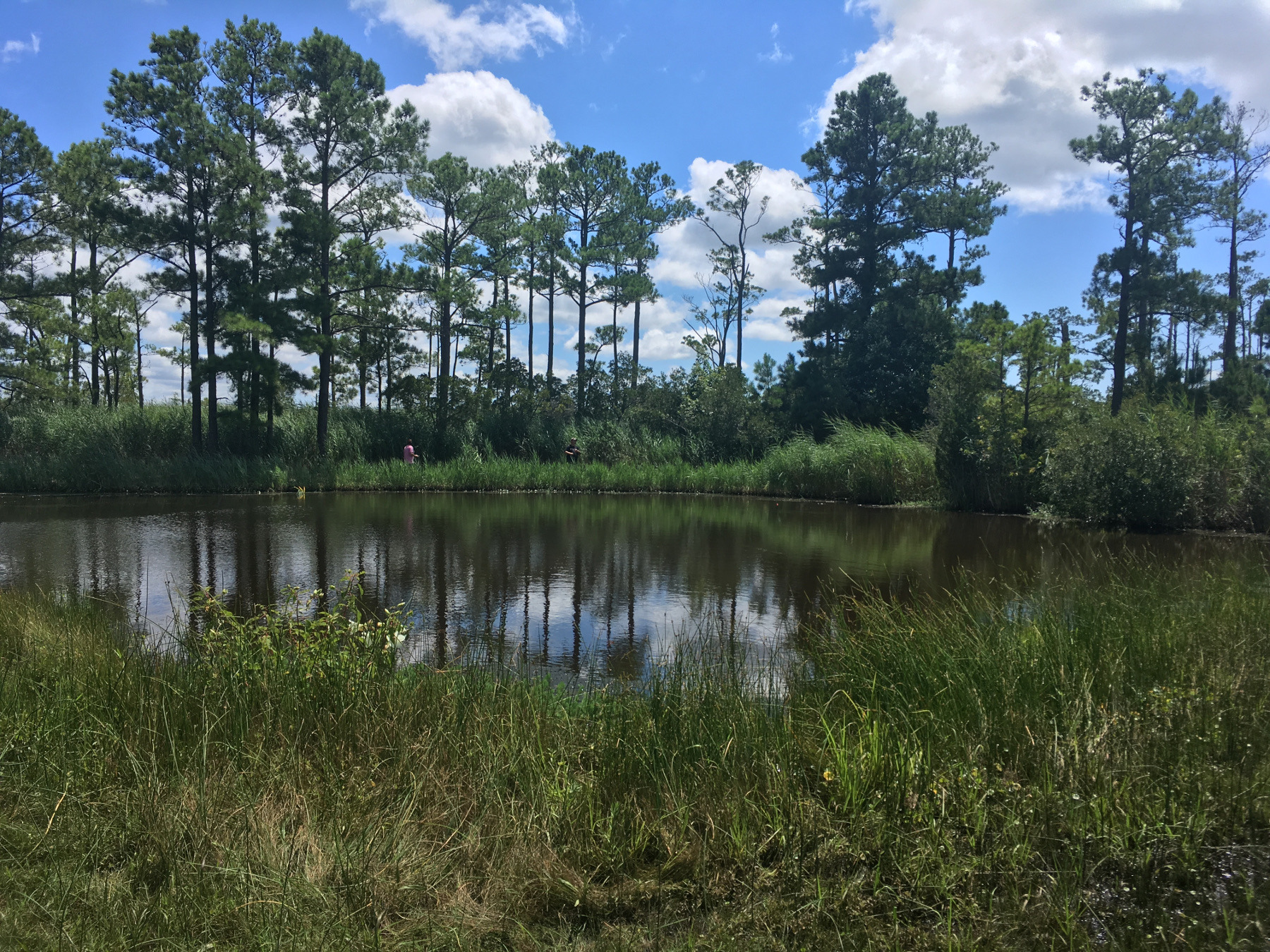
Invasive plants take over. Phragmites moves in along the edges and can fill a shallow pond in a few seasons. Our phragmites post covers why it spreads so fast.
Maryland: COMAR 26.17.02.11
In Maryland, the rule is in the Code of Maryland Regulations, COMAR 26.17.02.11, the maintenance section of the state’s stormwater management regulations. It says the owner “shall perform or cause to be performed preventive maintenance” on every completed stormwater practice and structure, to keep it working the way it was designed.
The same section requires each county or municipality to inspect stormwater systems during the first year of operation and then at least once every three years. The inspection report has to cover the condition of:
- vegetation or filter media
- fences and other safety devices
- spillways, valves and other control structures
- embankments, slopes and safety benches
- the pond or treatment area itself
- inlet and outlet channels and structures
- underground drainage
- sediment and debris in the storage and forebay areas
When an inspection finds a problem, the county or town ordinance has to notify the owner with a time frame for repairs, follow up to confirm the work was done, and enforce it if it was not. The regulation requires each county and municipality to carry this into its own ordinance, so the state sets the framework and your county or town sets the details. That is why we say per county regulations.
Delaware: DNREC’s Sediment and Stormwater Regulations
In Delaware, the rule is 7 DE Admin. Code 5101, the Delaware Sediment and Stormwater Regulations, Section 7, Post Construction Maintenance of Stormwater Management Systems.
Maintenance responsibility lies with the owner until ownership legally changes hands, and the system runs with the land, so a new owner takes it on. The owner has to keep the system working as designed, repair it promptly, and finish any maintenance the reviewing agency directs within the time frame it sets.
Maintenance reviews are done by DNREC or the delegated agency for the area. On our side of the state that is the Sussex Conservation District in Sussex County and the Kent Conservation District in Kent County.
Section 7 also spells out what a maintained pond looks like. It calls for no excessive sediment, stable slopes and vegetated areas, clear inlets and outlets, and no woody growth getting in the way. In its own words, section 7.4.6: “Trees shall be removed if found growing, on or within 15 feet of all pond embankments,” and “within 10 feet of structural components, such as pipe inlets.”
The Delaware regulation also allows an owner to share maintenance responsibility through a legal agreement with another party, including a maintenance company. Under that kind of agreement, the regulation says, responsibility is “joint and several among the parties to the agreement.”
Virginia: The Recorded Maintenance Agreement
In Virginia, the rules are in the Virginia Erosion and Stormwater Management Regulation, 9VAC25-875.
Under 9VAC25-875-130, long-term maintenance of a permanent stormwater facility has to be set out in an instrument recorded in the local land records. That instrument runs with the land. It gives the authority access to the property for inspections, and it provides for inspections, maintenance and maintenance reports.
Under 9VAC25-875-140, each stormwater facility has to be inspected at least once every five years by the program authority or someone it designates, not by the owner. The authority can accept the owner’s own inspection reports when a licensed engineer, architect, landscape architect or land surveyor, or someone holding a state certificate of competence, does the inspection. On Virginia’s Eastern Shore, Accomack and Northampton counties, that authority is the county or, where the county does not run its own program, the Virginia Department of Environmental Quality.
If your pond went in under a Virginia stormwater permit, its maintenance agreement should be in the land records for the property.
Get Compliant
A pond that has gone a few years without work usually needs some of all of this:
- Silt and sediment dug out of the forebay and the bottom, and hauled off
- Eroded banks rebuilt and held with matting or seed and straw until the grass takes
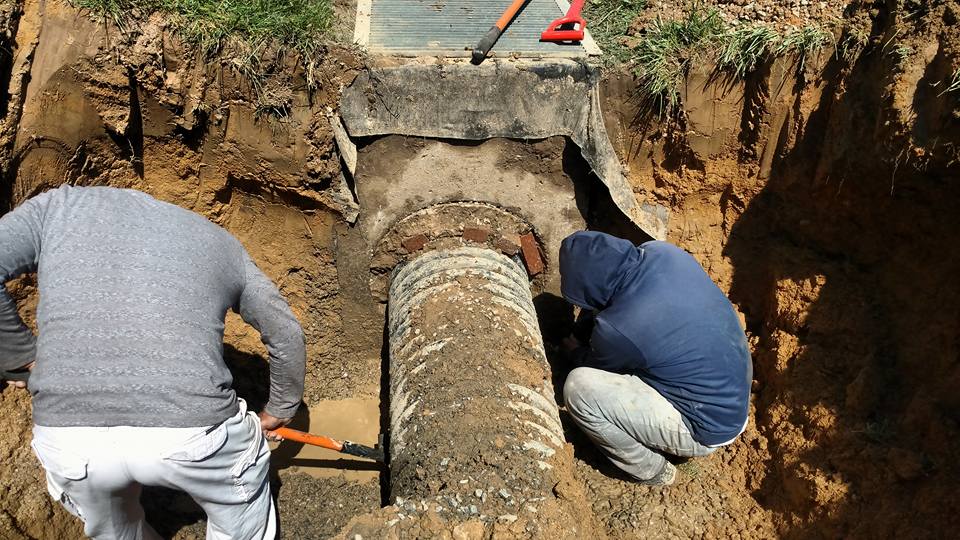
- Pipes and risers dug out, broken or separated pipe repaired or replaced
- Trees and brush cleared off the embankment and away from the riser and outfall, chipped on site or hauled away
Stay Compliant
Once the pond is back in shape, it stays that way with regular trips:
- Banks and embankments mowed so they stay in grass, stay stable and stay where an inspector can see them
- Inlets, trash racks and outfalls cleared of leaves, trash and branches, with extra trips in the fall
- Bioretention beds and swales weeded and mulched, dead plants replaced
- Phragmites and other invasive plants treated with aquatic-approved herbicide

The Certifications Behind the Work
Digging in a pond, regrading a bank and spraying at the water’s edge each fall under a different credential. We hold them ourselves: MHIC #105982, licensed contractor in Maryland, Delaware and Virginia; the MDE Erosion and Sediment Control Yellow Card; the DNREC Contractor Training Program Blue Card in Delaware; and MDA Pesticide Business License #27327, which covers aquatic-approved herbicide at the pond edge.
If you have a stormwater pond on a golf course, a commercial property, an HOA common area, a church or a farm, our stormwater pond compliance page covers the work in more detail. Call (443) 205-4415 and we will walk the pond with you, or request a free estimate.
Sources: Code of Maryland Regulations 26.17.02.11; 7 Delaware Administrative Code 5101, section 7.0; Virginia Administrative Code 9VAC25-875-130 and 9VAC25-875-140. Each county and town sets its own procedures under these.