When you manage large properties and valuable assets near the waterfront, your buffer is the only thing standing between your property and a large body of water when the flood tides arrive.
A riparian buffer is the band of plants between your ground and the water’s edge. It is the grass, marsh plants, shrubs and trees growing along a shoreline, a pond or a tidal creek. On the Eastern Shore, where a lot of property sits only a few feet above high water, it is the part of the landscape that takes the hit first.
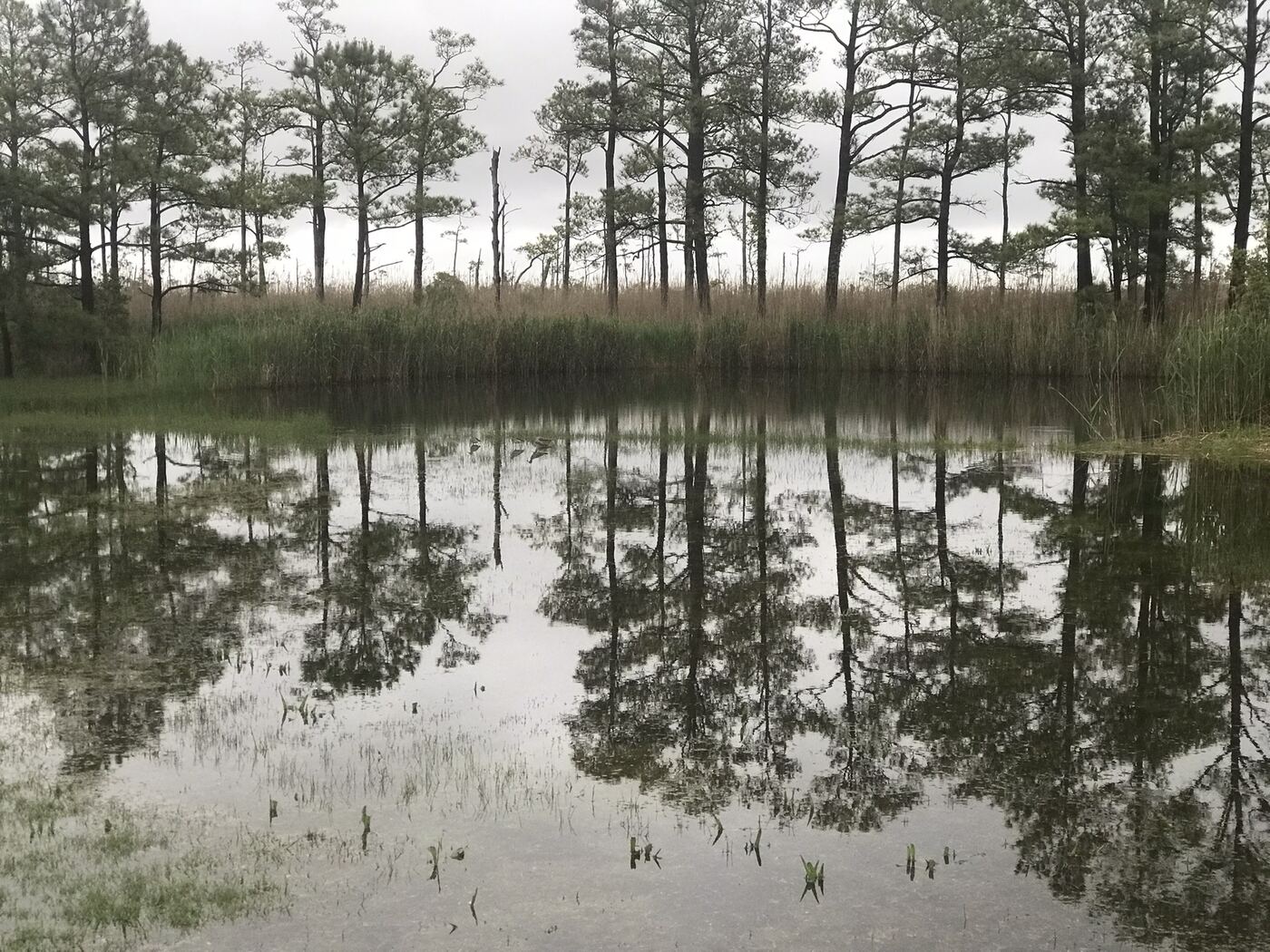
What the Buffer Does When the Water Comes Up
Your buffer keeps out all of the sand, silt and debris that would otherwise be left when the waters recede. It also prevents your ground from being pulled out to sea.
Those are two different jobs. The first one happens on the way in. Stems and leaves slow the water down, and slow water drops what it is carrying. Sand, silt, dead reed and whatever washed off a neighbor’s dock settles in the buffer instead of across your lawn, your drive or the base of a building.
The second happens on the way out. As the tide drains back, it pulls on the soil. Where roots are holding that soil, it stays put. Where the bank is bare, a little goes with every tide, and after a few storms you can see that the bank has dropped.
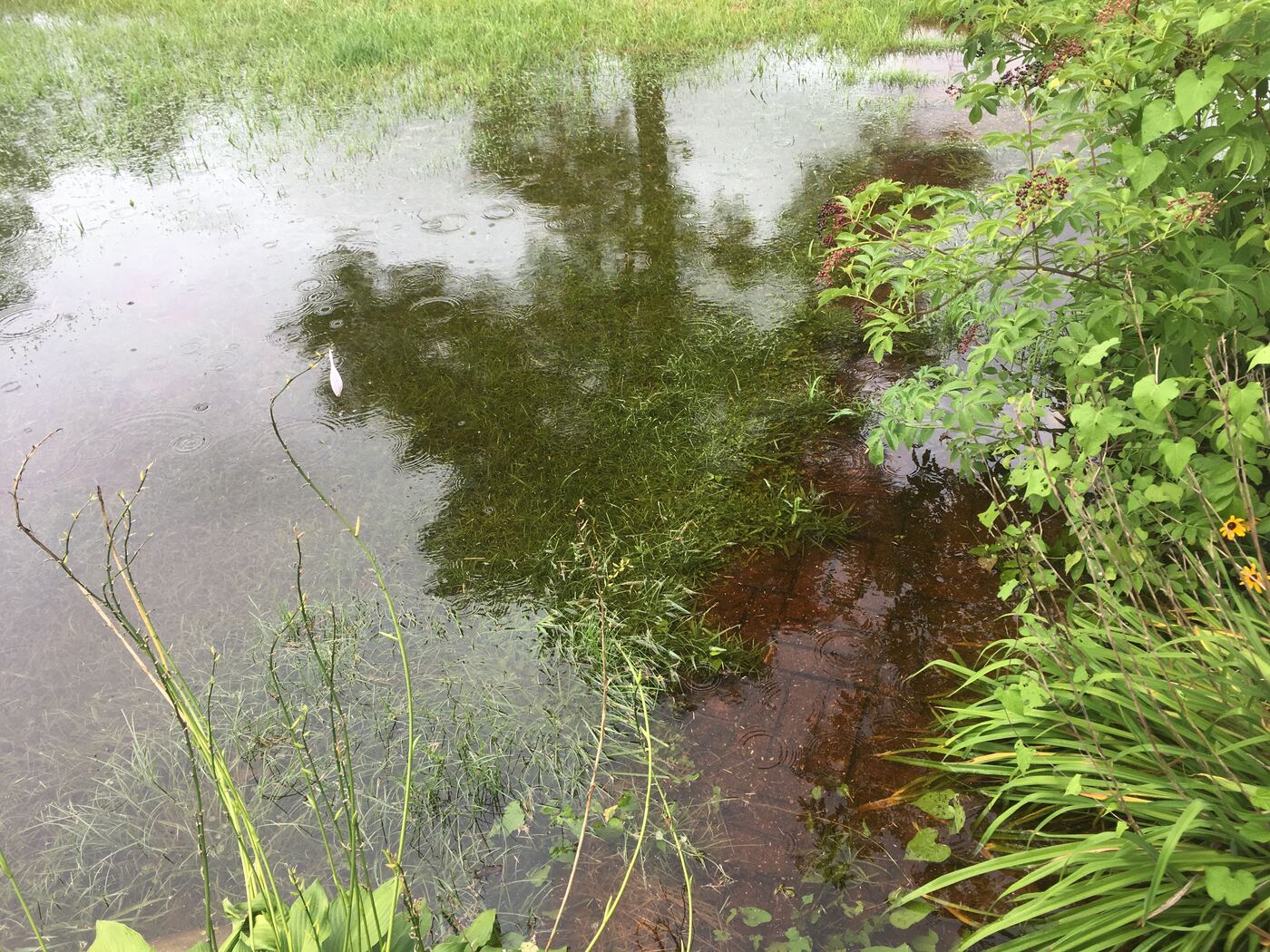
What Else a Buffer Is Doing
Holding the bank is the big one, but the plants in a buffer are busy with a lot more than that.
- Filtering what runs off your ground. Rain running off lawns, fields and drives carries fertilizer and soil. Roots in the buffer take up nitrogen and phosphorus before they reach the water, and the plants catch the soil.
- Shading the water. Trees along a creek or pond keep the water cooler in summer, and cooler water holds more oxygen for fish.
- Feeding the water. Leaves that fall in are food for the small insects and crustaceans that fish and crabs eat.
- Giving wildlife a place to live and a way to move. A continuous strip of cover along the water is a travel lane for deer, foxes and songbirds, nesting cover for ducks, and nectar and seed for pollinators and waterfowl.
Forested Buffers
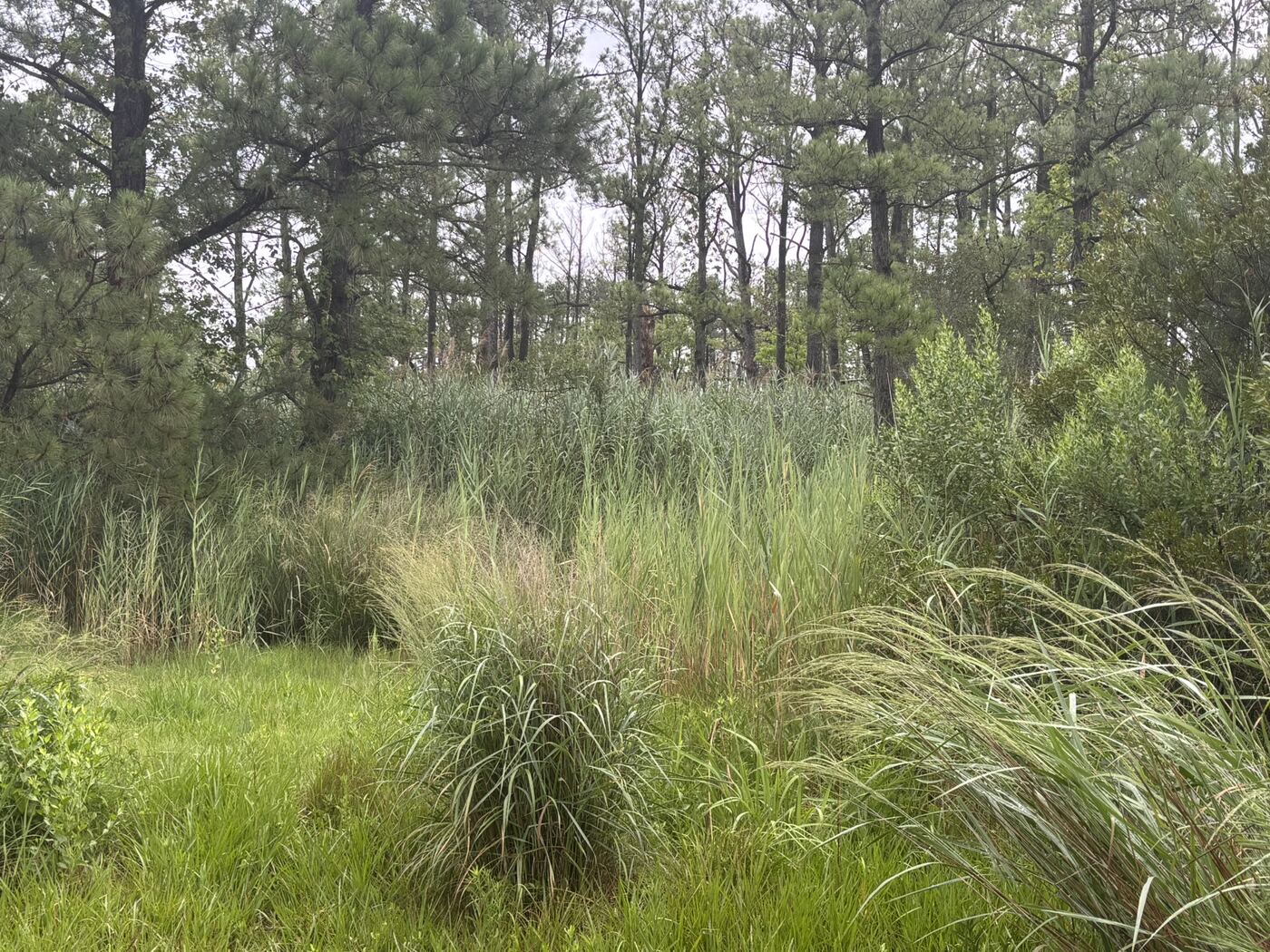
A forested buffer has layers: a canopy of trees, a shrub layer under it, and ground cover under that. On the Shore the canopy is usually pine with oaks and other hardwoods mixed in, and the shrub layer is things like wax myrtle, groundsel bush, winged sumac and holly.
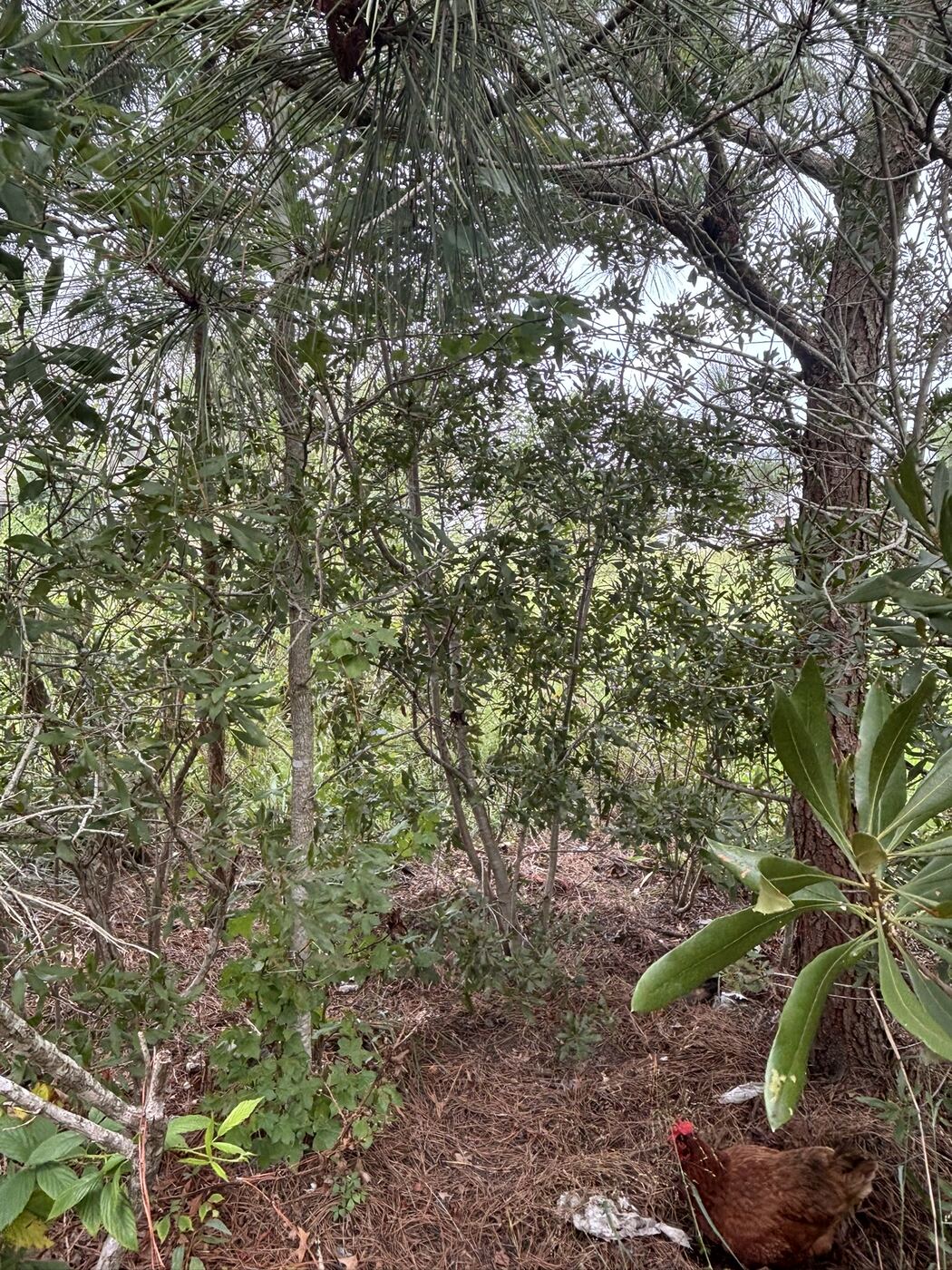
Trees and shrubs hold ground with deep, woody roots, and they do the most for water temperature and wildlife. Oaks carry more kinds of caterpillars than any other tree here, which makes them one of the best trees you can have for nesting birds.
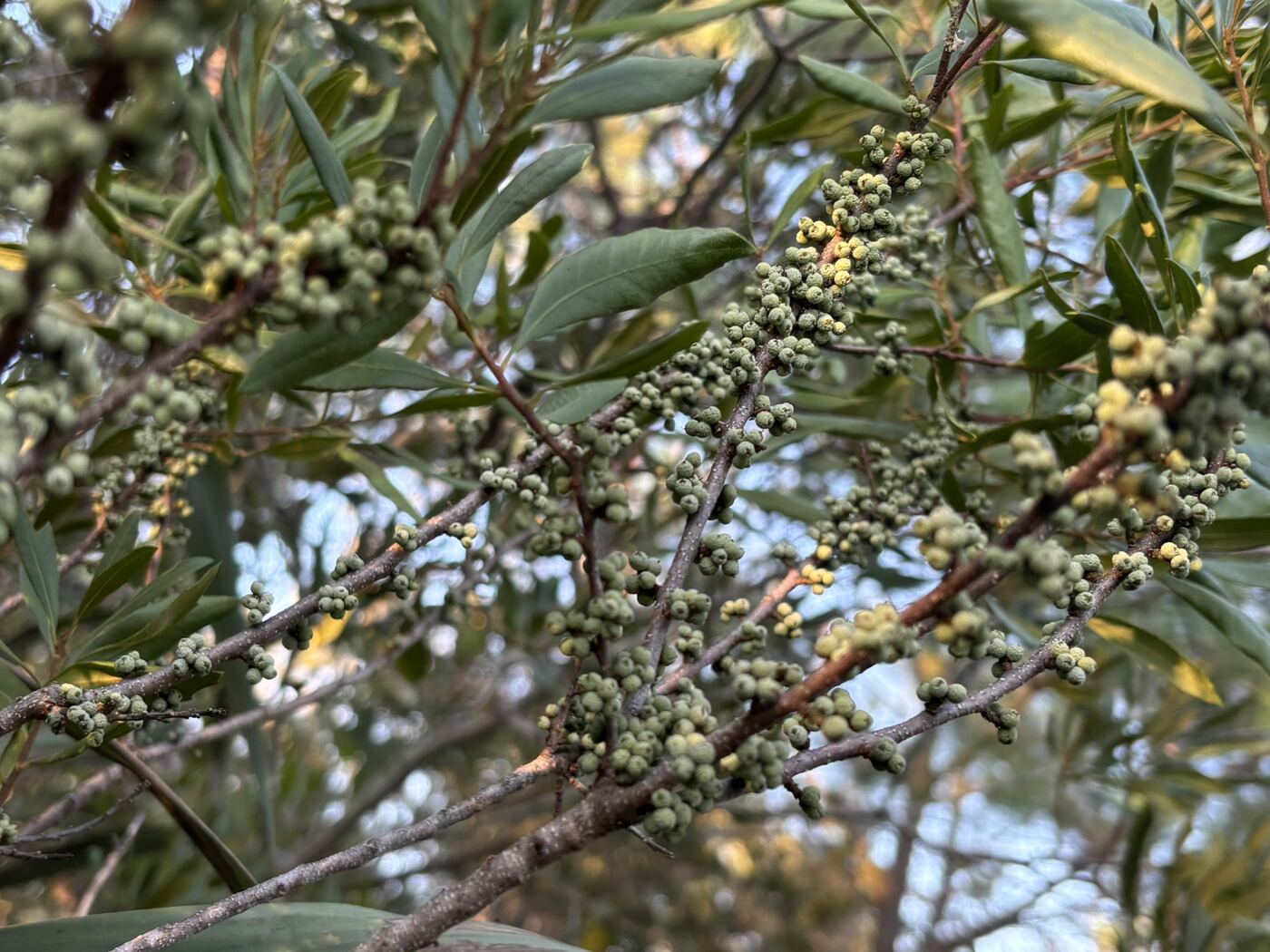
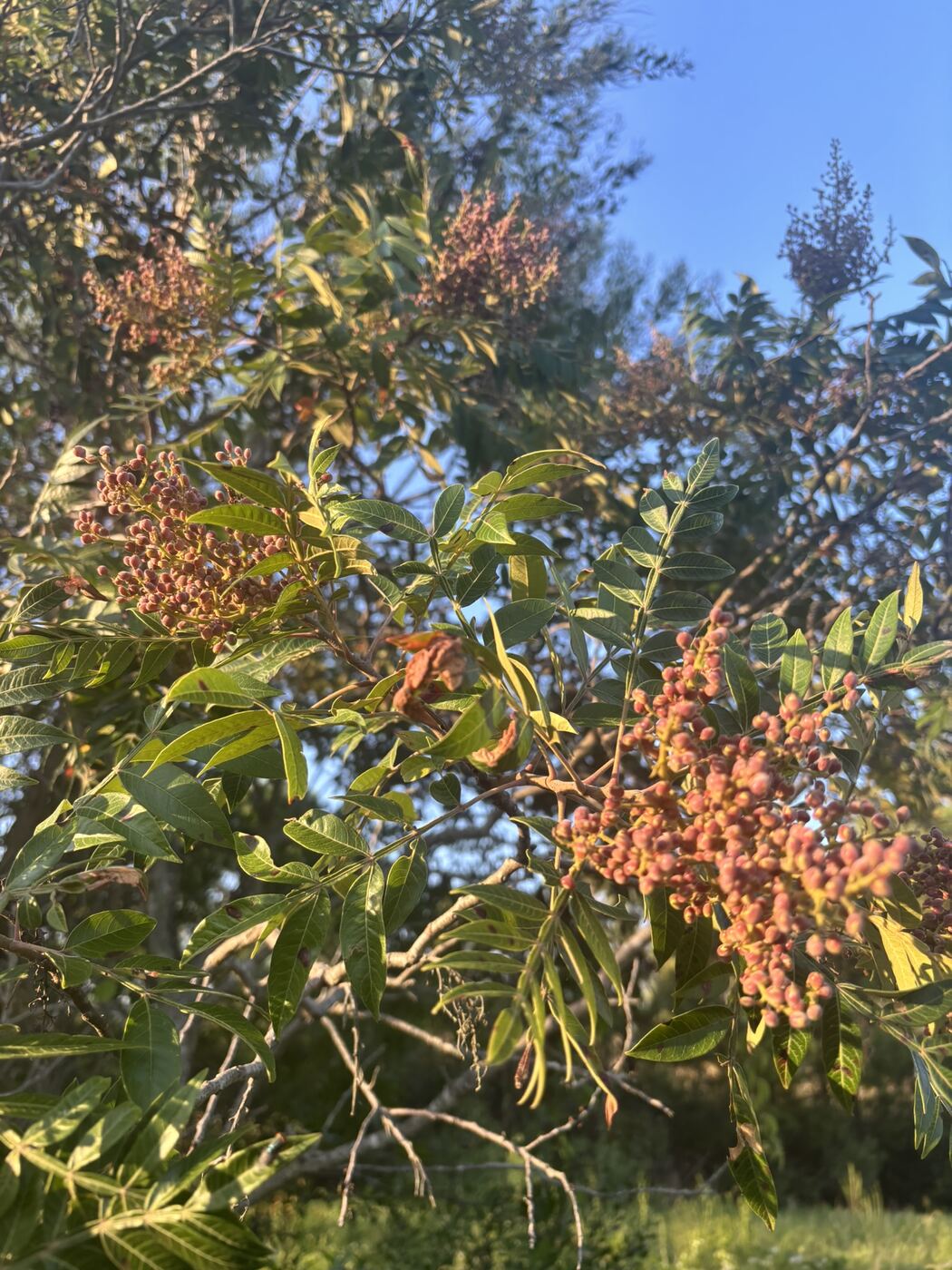
Forested buffers work best on the higher ground back from the water. Right at the tidal edge, salt and standing water keep most trees from taking hold.
Unforested Buffers
An unforested buffer is grasses, marsh plants and flowers with no tree canopy. That is what naturally grows at the tidal edge, and on a lot of Shore properties it is the only buffer there is room for.
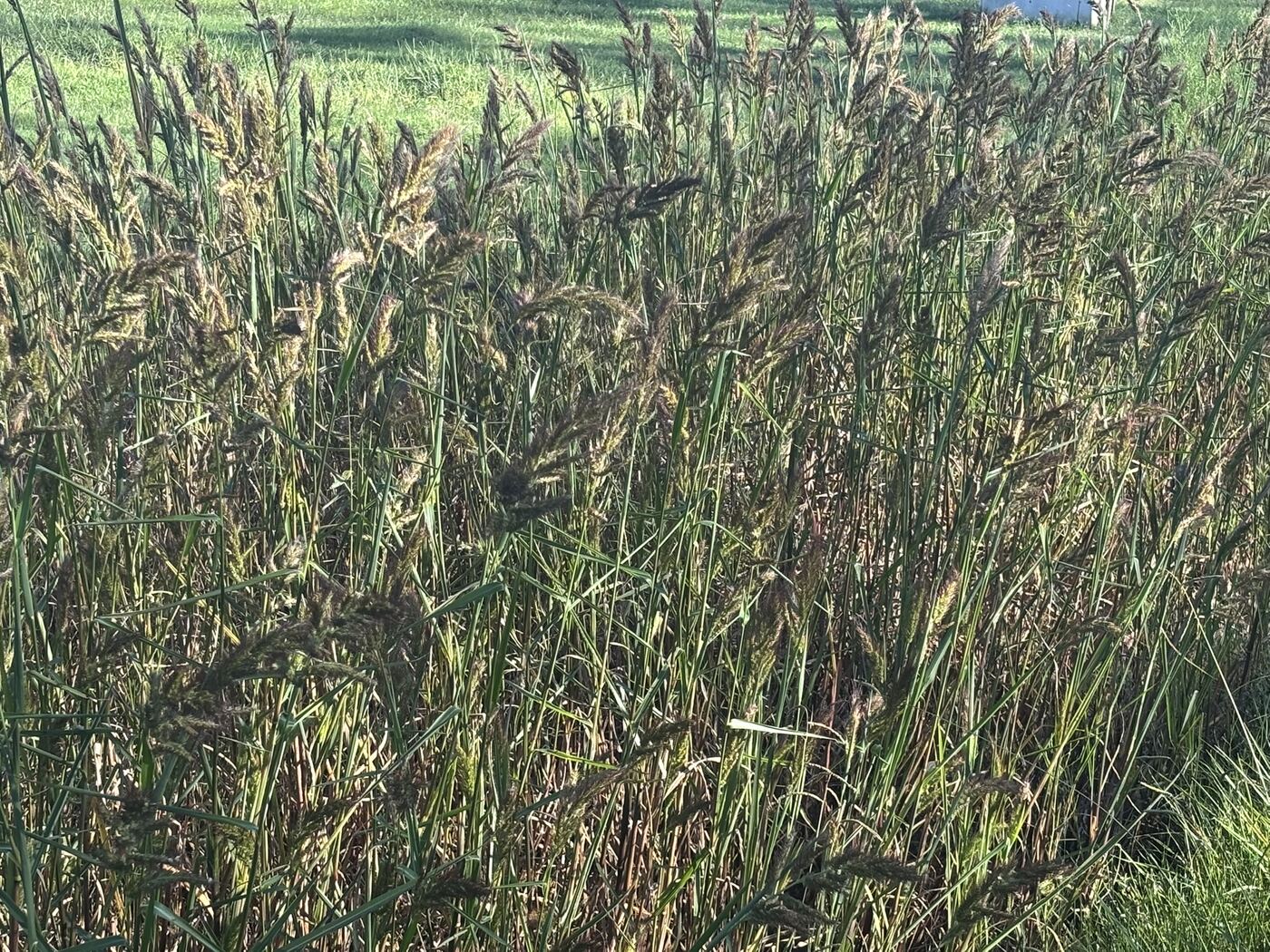
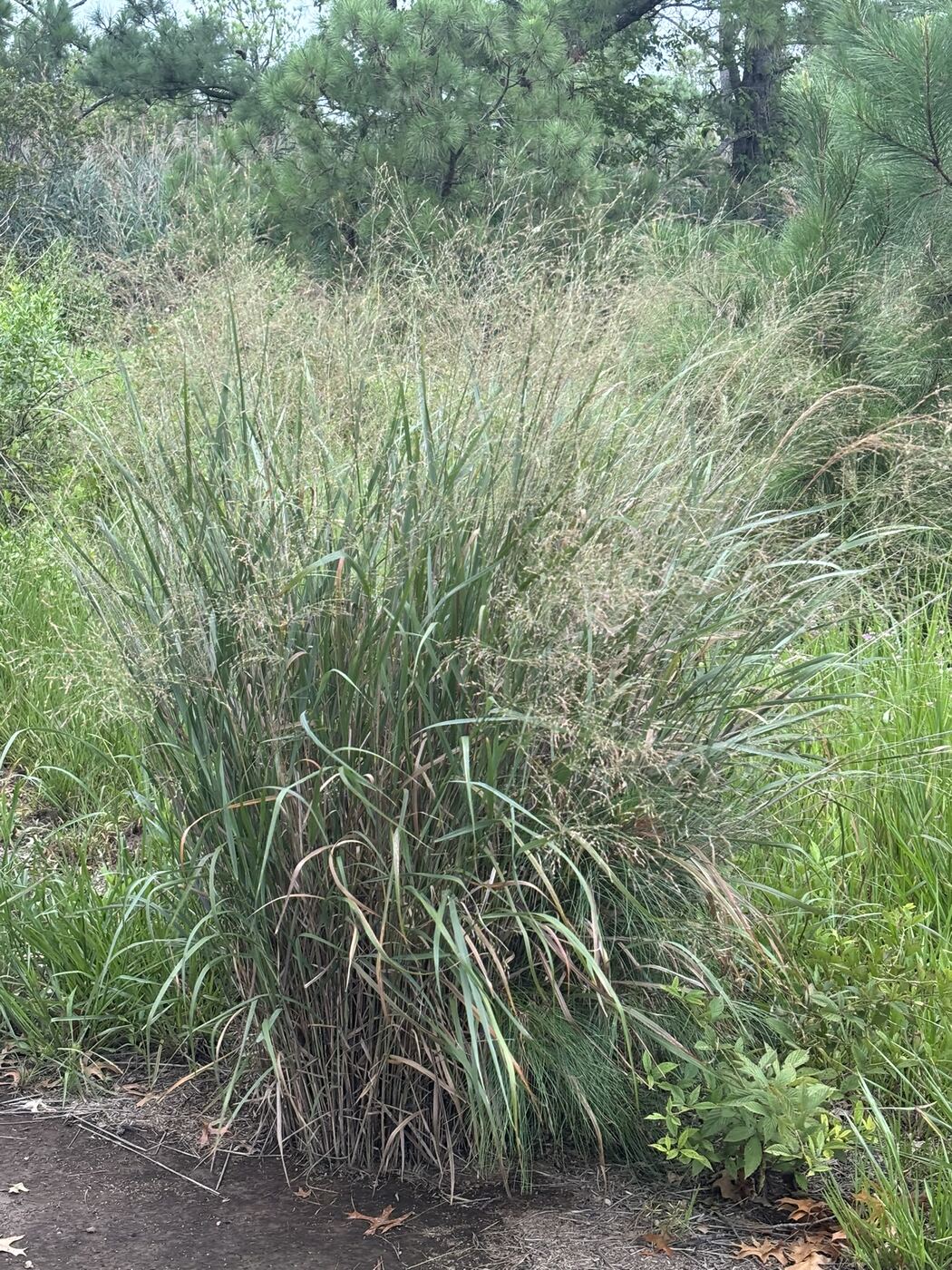
The grasses do most of the holding. Switchgrass grows in dense clumps with roots running several feet down, and a row of them along a bank holds a lot of soil. The clumps stand through winter, so they are still slowing water and sheltering birds when everything else has died back.
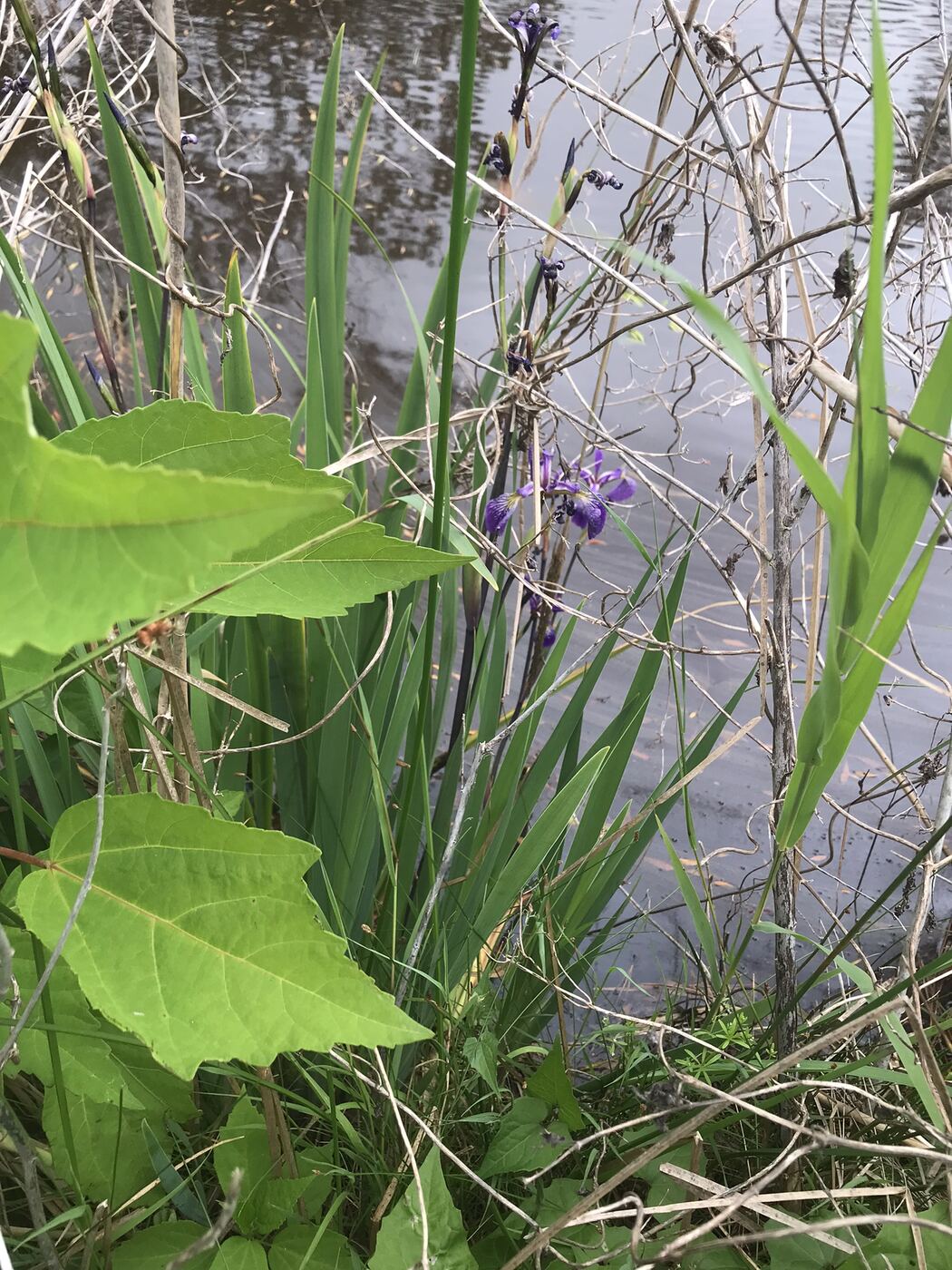
In among the grasses are the flowering plants, and they are what make the buffer useful to wildlife from spring to frost:
- Rose mallow, the big white or pink hibiscus of tidal marsh edges
- Blue flag iris, growing right in the wet ground at the waterline, which is the ground that washes out first
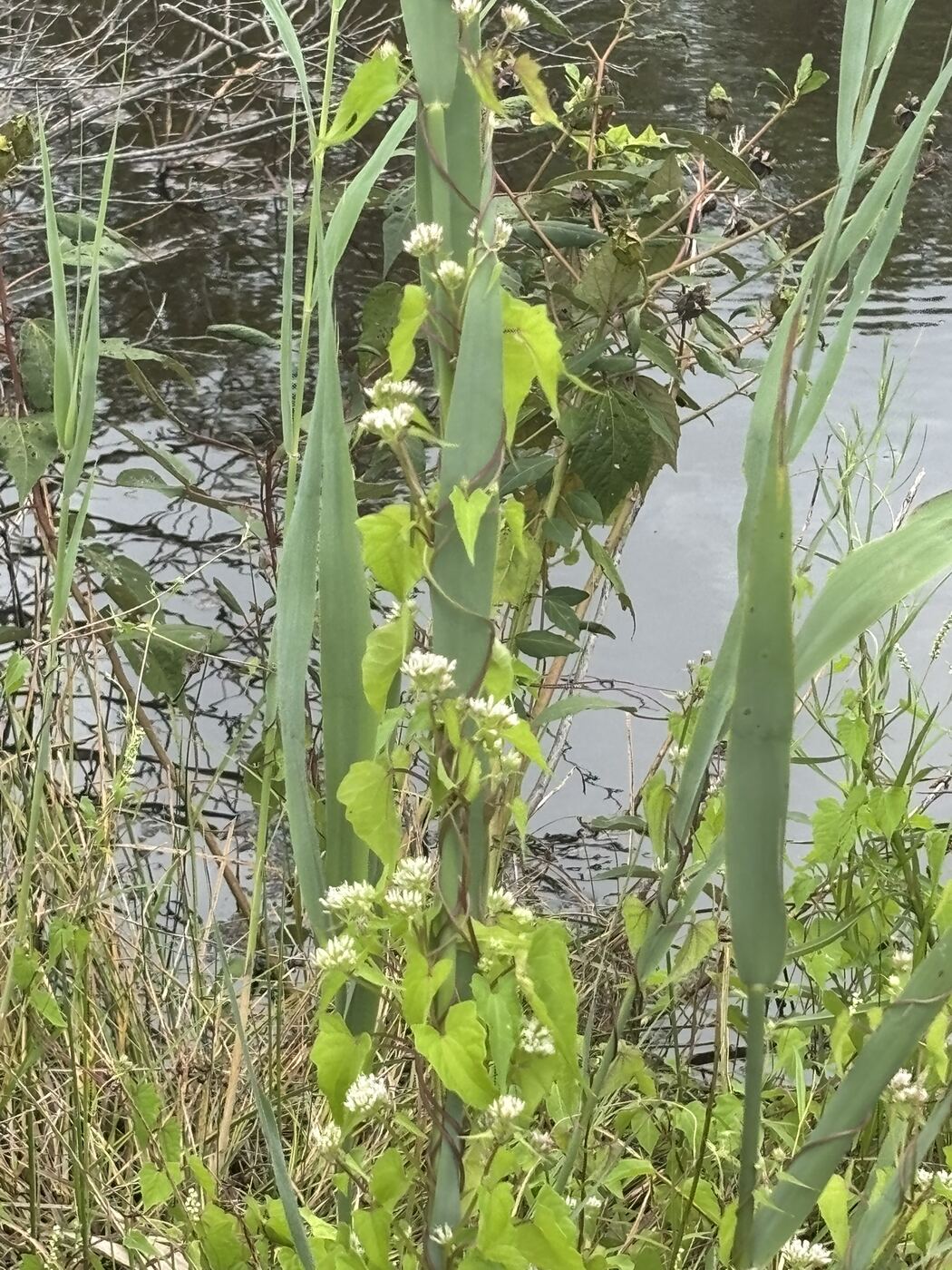
- Climbing hempvine, a native vine with white flower clusters that looks weedy but belongs there
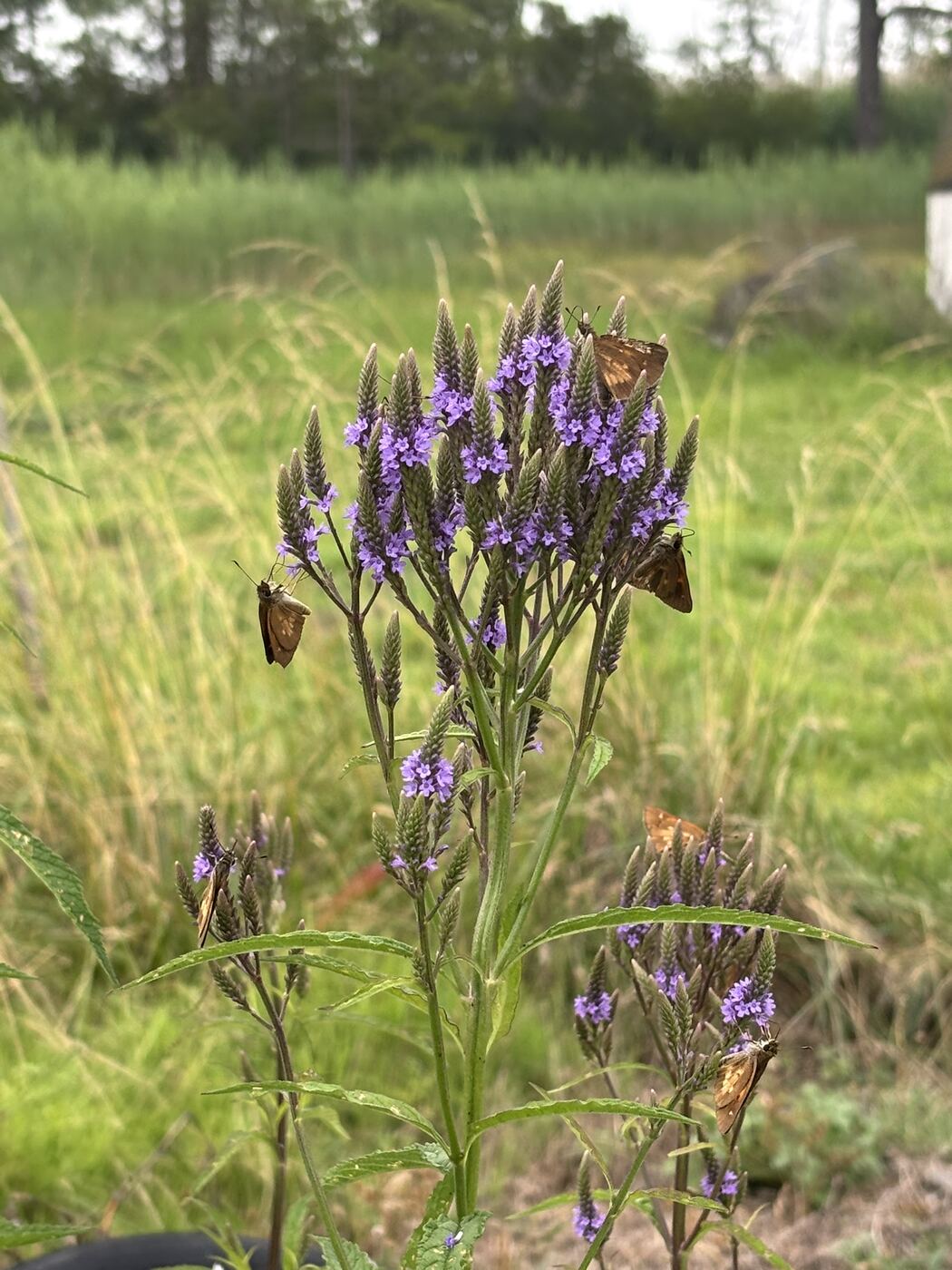
- Blue vervain, boneset and saltmarsh fleabane, summer and late summer nectar
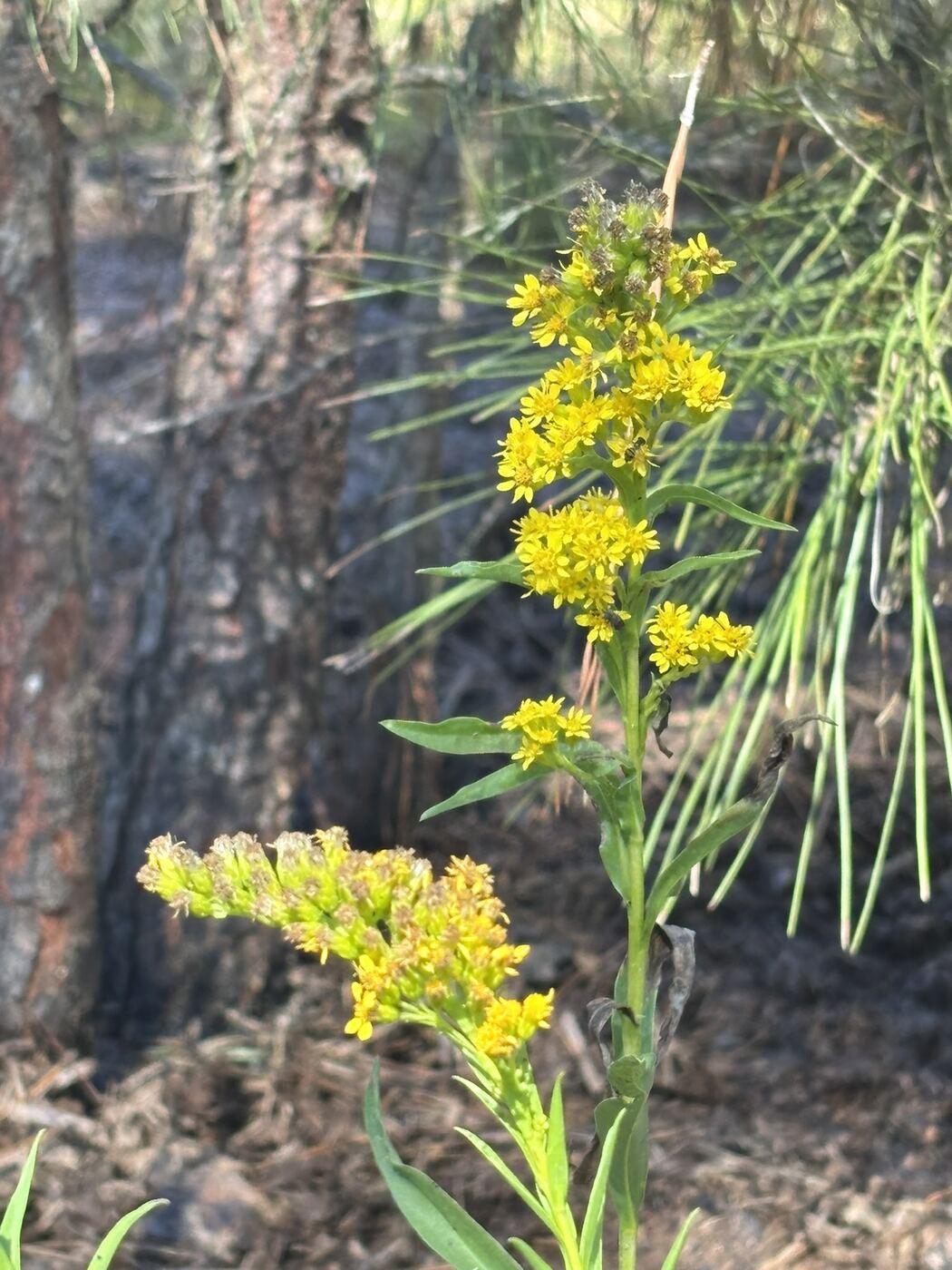
- Seaside goldenrod and asters, fall food for bees and for monarchs passing through
Where Phragmites Removal Goes Wrong
The main concern for many property owners and managers is eradicating phragmites. However, in doing so, other necessary riparian species may be lost as well, leaving you with little to no buffer, and your property at the mercy of the tides.
Phragmites has earned its reputation. It grows into a solid wall, shades out what is under it, and keeps spreading underground. There is more on how it grows and when to treat it in our phragmites guide.
The trouble starts when the only plan is to kill the phrag. A broadcast spray over the whole shoreline, or scraping the bank down to dirt, takes out the native plants growing in and around the stand along with it.
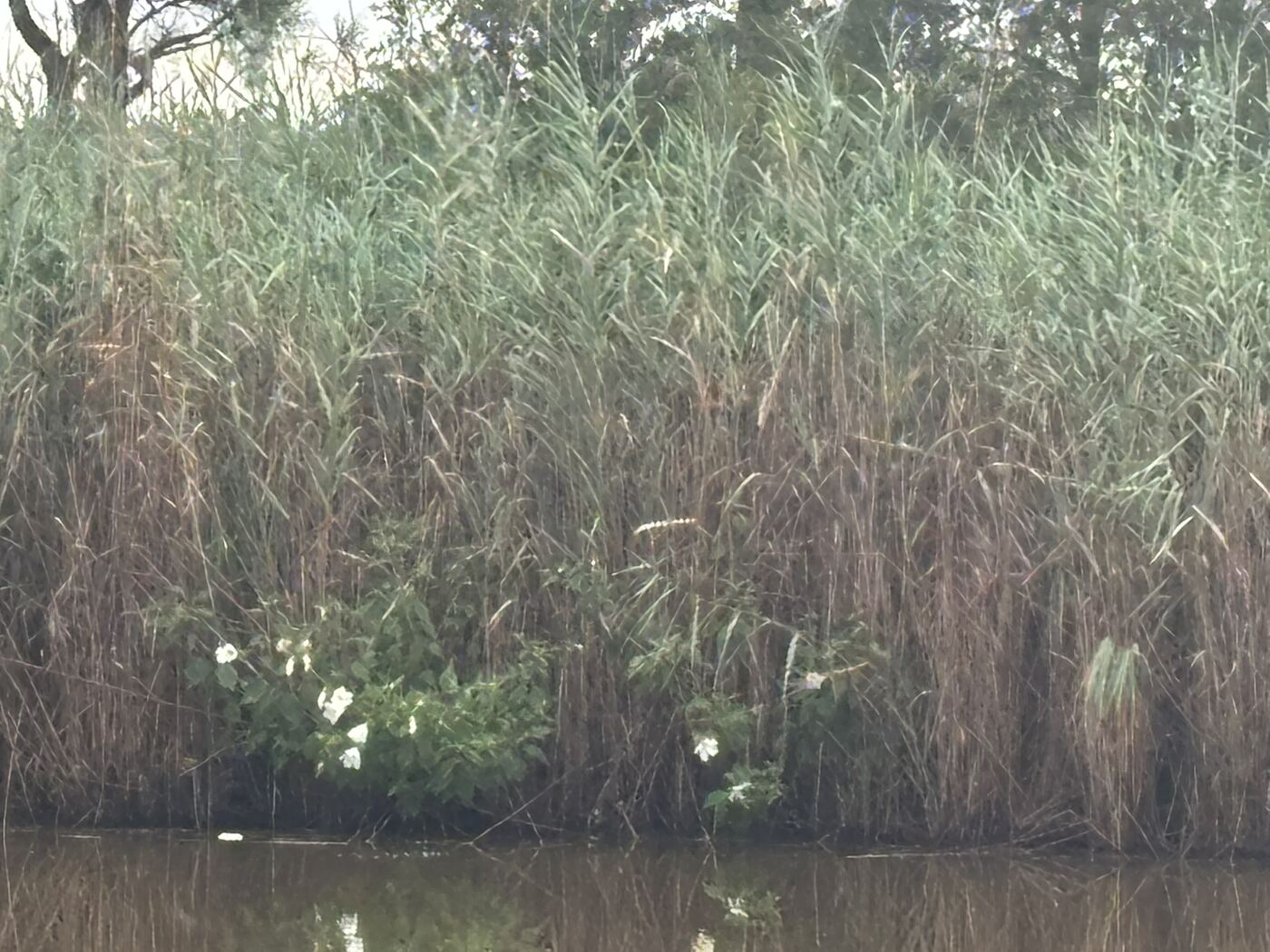
Bare ground on a shoreline does not stay bare for long. Phragmites comes back from seed and from pieces of root left in the soil, and on open mud there is nothing to compete with it. That is how a property ends up treating the same stand year after year while the bank keeps getting lower.
Knowing What to Keep
Knowing what to get rid of and what to keep is part of the solution. Before any treatment we walk the buffer and sort out what is there.
- Comes out: phragmites, and the other invasives that turn up on the same ground, like purple loosestrife, multiflora rose and mile-a-minute vine.
- Stays: switchgrass and the other native grasses, marsh shrubs, rose mallow, iris, hempvine, goldenrod, boneset, and the trees behind them.
Some of it is easy to tell apart and some of it is not. There is a native common reed on the Shore that looks a lot like the invasive one. Young switchgrass and cordgrass can be hard to separate from young phragmites in spring. Climbing hempvine gets pulled as a weed all the time. That sorting is worth doing before anything gets sprayed.
Taking Out Only What Needs to Go
The other part is knowing how to target specific species for removal, leaving the riparian species in your buffer to encourage the crowding out of undesirable species like phragmites.
The methods are picked so the plants you want to keep are not in the way:
- Spot spraying with a backpack sprayer, aimed at the phragmites only, instead of one broad pass over the whole shoreline.
- Cut-stem treatment, where single canes are cut and treated right at the stem. It is slow, but nothing around it gets touched, so it is the right tool where natives grow right in with the reed.
- Wiping, where herbicide goes onto the tall phragmites leaves by contact. Phrag stands taller than most of what grows under it, so the lower plants stay out of reach.
Timing matters as much as method. Late summer, when phragmites is sending its energy down into its roots, is when treatment reaches the rhizomes, the underground runners it spreads by.
A note on mowing. Mowing and cutting are useful for knocking a big stand back, and we recommend them in other posts. Inside Maryland’s Critical Area buffer, though, the state’s guidance for invasive removal is hand work or a backpack sprayer, not mowing or bush hogging. More on that below. Where a stand sits inside that line, the plan has to fit the rules.
Herbicide work in or near tidal wetlands in Maryland needs a licensed applicator, and spraying an acre or more of wetland needs a permit from the Maryland Department of the Environment. Marshall Property Management holds MDA Pesticide Business License #27327.
Letting the Buffer Crowd It Out
When the phragmites comes out and the natives are left standing, the natives fill in. Grass clumps spread, shrubs fill out, and by the time a seed or a root fragment tries to start again, that ground is already shaded and full of roots. That is what slows a stand from coming back, and it is why a targeted program gets easier each year instead of starting over.
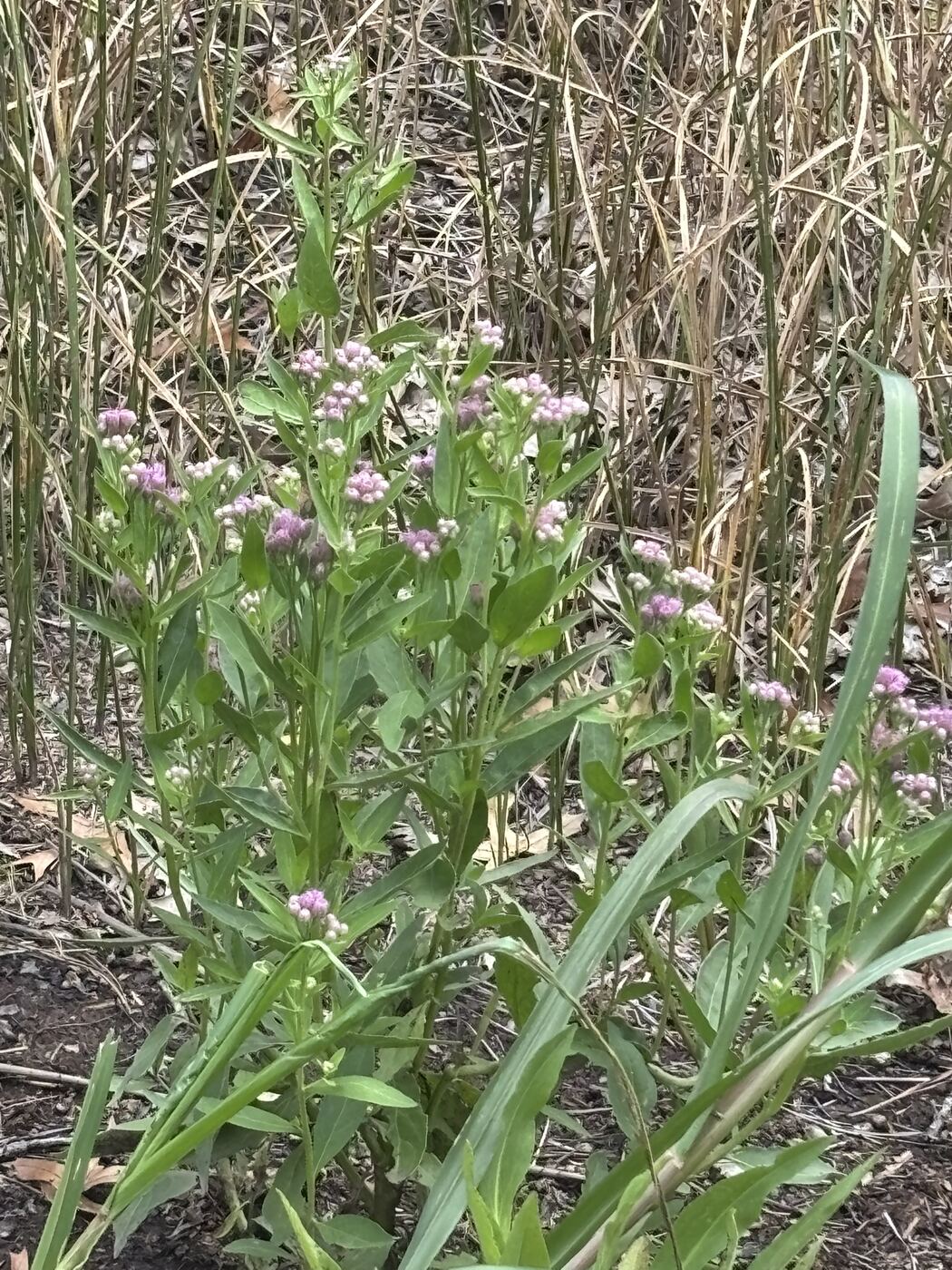
Where the buffer is too thin to fill in on its own, we plant it. Native plugs, shrubs and seed go into the open spots so the first thing to take hold is something you want there.
The Rules on a Maryland Waterfront
Most tidal waterfront in Maryland falls inside the Chesapeake Bay Critical Area, which covers land within 1,000 feet of tidal water and tidal wetlands. Inside it is the Critical Area Buffer, at least 100 feet back from mean high water or the edge of tidal wetlands, and wider where there are wet soils or steep or erodible slopes.
The state encourages taking invasives out of the buffer and putting natives back. According to the Critical Area Commission’s guidance:
- Removing phragmites or other invasives in the buffer calls for a Simplified Buffer Management Plan, approved by your county planning office.
- Removal is done by hand or with a backpack sprayer. Mowing and bush hogging are not permitted for it.
- What comes out gets replaced with native plants.
Your county can tell you exactly where the buffer line falls on your property and what the plan needs. We look at this as part of the first site visit.
Help That Is Out There
There are state and federal programs that supply trees, planting, or help with the work on buffers and invasive plants. Which ones fit depends on where you are and how your land is used. These are the ones we found, as of September 2026.
For Maryland waterfront homes and estates
- Backyard Buffers (Maryland DNR Forest Service) gives landowners with a creek, ditch, stream or other waterway on or near their property a free bundle of 20 to 30 native tree and shrub seedlings. Reservations are usually taken through March for spring planting, and the bundles run out.
- Lawn to Woodland (Maryland DNR Forest Service) and Healthy Forest, Healthy Waters (Alliance for the Chesapeake Bay) plant open ground back into woods for free, including follow-up care. Healthy Forest, Healthy Waters projects start at one acre.
- Phragmites control. Maryland law allows DNR to help landowners control phragmites. When we checked, DNR’s Wildlife and Heritage Service listed a contact for assistance rather than an open program, so call them before counting on it.
For Maryland farms
- The Conservation Buffer Initiative (Maryland Department of Agriculture) is for cropland next to a stream or ditch. It covers grass buffers 10 to 100 feet wide and forest buffers 35 to 100 feet wide. Sign-up has run November through April.
- MACS (Maryland Department of Agriculture, through your county Soil Conservation District) helps farms install grass and forest buffers along with other conservation practices.
- EQIP (USDA Natural Resources Conservation Service) can help with forest buffers, grass and wildflower buffers, and a practice written for treating dense weeds like phragmites. It is open to farm and forest landowners.
- CREP (USDA Farm Service Agency) takes streamside cropland out of production for 10 to 15 years and plants it as buffer.
In Delaware and Virginia
- Delaware DNREC’s Division of Fish and Wildlife has a phragmites control program for landowners with larger stands.
- Virginia’s Department of Forestry has a program for landowners who leave streamside forest standing when timber is cut, and the Department of Conservation and Recreation’s agricultural program supports buffers along streams and tidal shorelines.
Anywhere on the Shore
- Partners for Fish and Wildlife (U.S. Fish and Wildlife Service, Chesapeake Bay office) works directly with private landowners on wetland and streamside habitat restoration, case by case.
Before you count on any of these, check with the agency. Programs open and close, sign-up windows move, some fill up partway through a year, and eligibility depends on details like acreage, land use and whether the ground is already enrolled in something else. Most of them also come with rules about what you plant and how long you keep it. This list is a place to start, not a promise that a program will take your project.
If you manage waterfront property on the Eastern Shore and want to deal with phragmites without losing your buffer, send us the details or call (443) 205-4415. We will walk the shoreline with you, sort out what stays and what goes, and look at whether any of these programs fit your ground. There is more on our phragmites control and erosion control work.