A hunting camp gets used a few weekends a year. The rest of the time it sits. Grass grows up around the cabin, a blow puts a pine across the lane, raccoons find the feeder, and the corn in the shed takes on water. None of it is a big job on the day it happens. It turns into one when nobody sees it for two months.
This post covers the things we look after on camps across the Shore: the deer themselves, bait and feeders and the rules on them in all three states, how to store corn and firewood so they hold up, and what a storm, a flood or a heavy snow does to a place with nobody there.
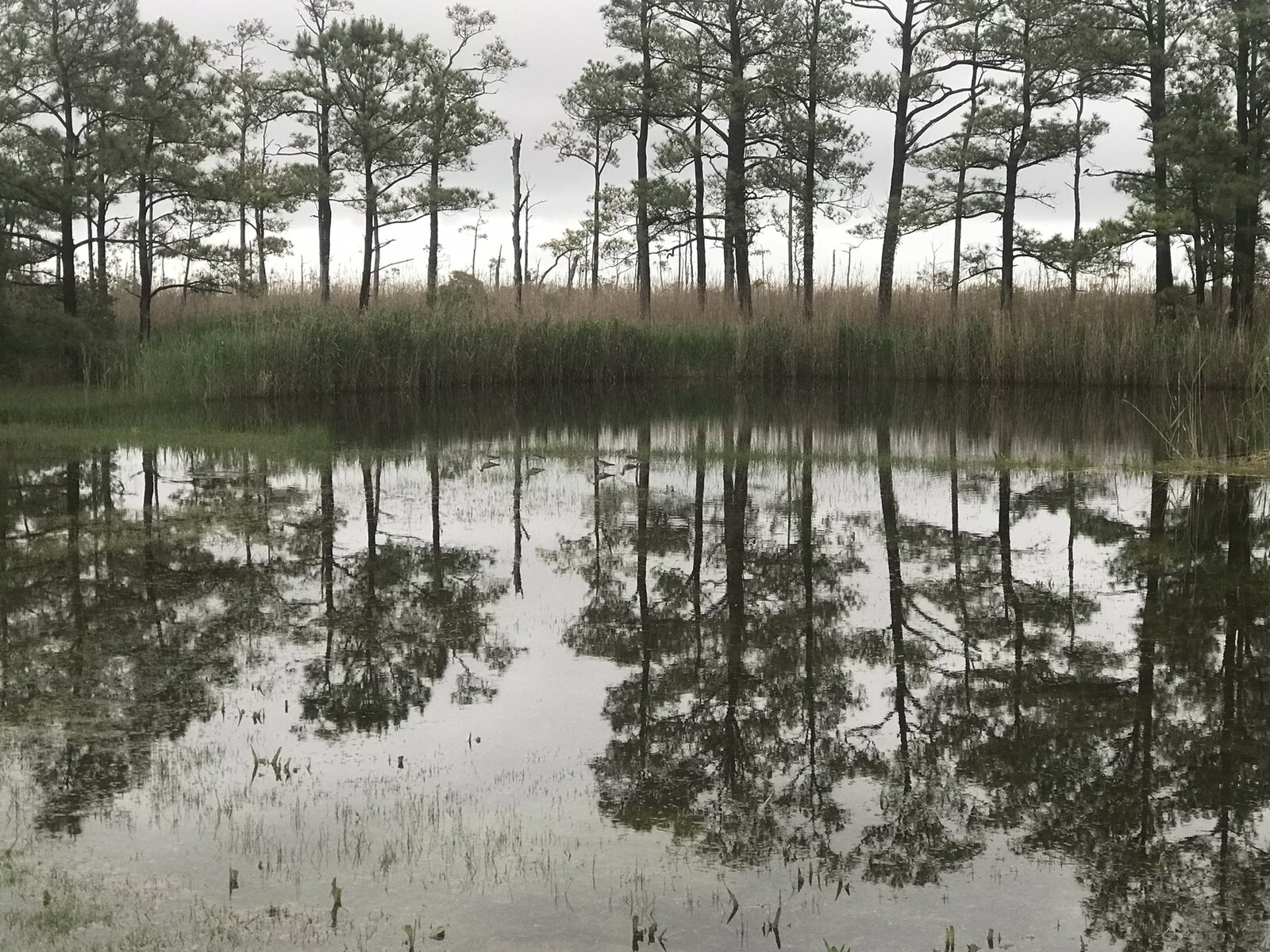
The Deer on Your Ground
The Shore has two deer. Whitetails are everywhere. Sika, a small elk brought over from Asia, live wild in Maryland only on the Shore, mostly in the Dorchester marshes and into Wicomico and Somerset. They move at night, they whistle, and they hold in thick marsh and loblolly where a whitetail would not bother.
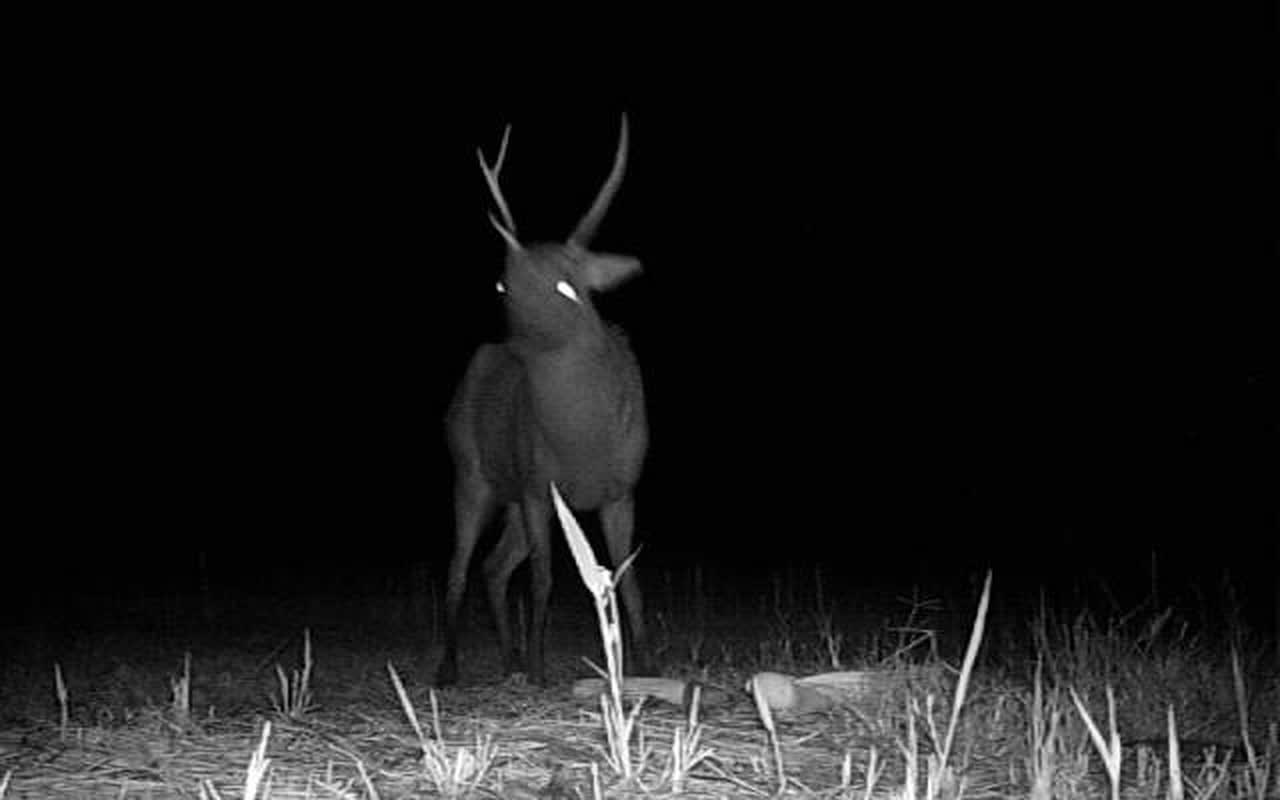
How many deer a piece of land carries comes down to food and cover. Taking only bucks year after year leaves the does to grow the herd until the woods are browsed up to head height and the field edges are eaten bare. Taking does is how a landowner actually manages numbers. In Maryland, the Department of Natural Resources runs Deer Management Permits for farms with crop damage, which allow antlerless deer to be taken outside the regular seasons.
Good habitat does more for a herd than anything poured out of a bag:
- Food plots. Clover, brassicas and winter wheat feed deer through the late season and into spring, and they are legal in all three states. Brassicas need about two months of growth before the first frost, so on the Shore they go in during August; wheat, oats and clover come up faster and go in through September and into October.
- Edges. Deer feed where field meets woods. Edges kept open and mowed on a rotation put browse in reach.
- Cover. Thickets, cutovers and grass buffers along the water are where deer bed. Clearing out the underbrush around a camp to open up a view takes that away.
- Water. Ponds and ditches with soft, grassy edges are easier to get to than ones choked with phragmites.
Bait and Feeders: The Rules Are Different in Each State
Corn on the ground is legal in some places and not in others, and the Delmarva Peninsula crosses three states. Check the current hunting guide every season, since these change.
- Maryland. Hunting deer over bait is allowed on private land. It is not allowed on state-owned or state-controlled land. Baiting bears is illegal.
- Delaware. In 2026 Delaware confirmed its first cases of chronic wasting disease in wild deer, in Sussex County. Emergency orders from DNREC in August and September made Wildlife Management Zones 11, 14 and 16 a Chronic Wasting Disease Management Zone. Baiting and feeding deer are banned inside that zone, deer taken there in the November firearm season have to go through a check station, and natural deer urine lures are banned statewide.
- Virginia (including Accomack and Northampton on the Shore). Hunting over bait is illegal. Feeding deer for any reason is illegal statewide from September 1 through the first Saturday in January. Food plots and planted crops do not count as feeding.
Chronic wasting disease is the reason feeding rules keep tightening. It is a prion disease, it is always fatal to deer, and it spreads where deer crowd together and share the same spot of ground, which is exactly what a pile of corn does. Maryland’s management area is on the other side of the Bay, in seven counties from Allegany to Montgomery. Delaware’s is a short drive from the Maryland line.
Why the Feeder Draws Raccoons
A feeder put out for deer feeds whatever finds it first, and on the Shore that is usually raccoons. A family of them can empty a spin feeder in a night or two, and if the camp is empty for three weeks the deer get two days of corn and the raccoons get the rest.
That is more than wasted corn:
- Rabies. Raccoons are the main carrier of rabies in Maryland. A feeder brings them in close to the cabin, the dogs and the people who come for the weekend.
- Disease between deer. In a Mississippi State study, chronic wasting disease prions turned up on feeders that were fenced so only raccoons and other small animals could get in. Raccoons were the likely carriers, picking prions up at one feeder and leaving them at the next.
- Damage. Raccoons tear into feed bins, chew through bags in the shed and get into the cabin itself through a loose soffit or vent.
What keeps raccoons off:
- A cage around the spinner, so the corn throws through the mesh but nothing can hang on and spin it.
- Height and a slick pole. Hang the feeder high enough that a raccoon cannot reach it from the ground, on a smooth metal pole or a cable between two trees, with a baffle under it.
- Less corn, more often. A feeder set to throw a small amount twice a day leaves less on the ground overnight. The corn that sits on the ground is what feeds the raccoons and molds first.
- Nothing out while the camp is empty, where it is legal to feed at all. A full feeder left for a month is mostly a raccoon feeder.
Storing Corn So It Keeps
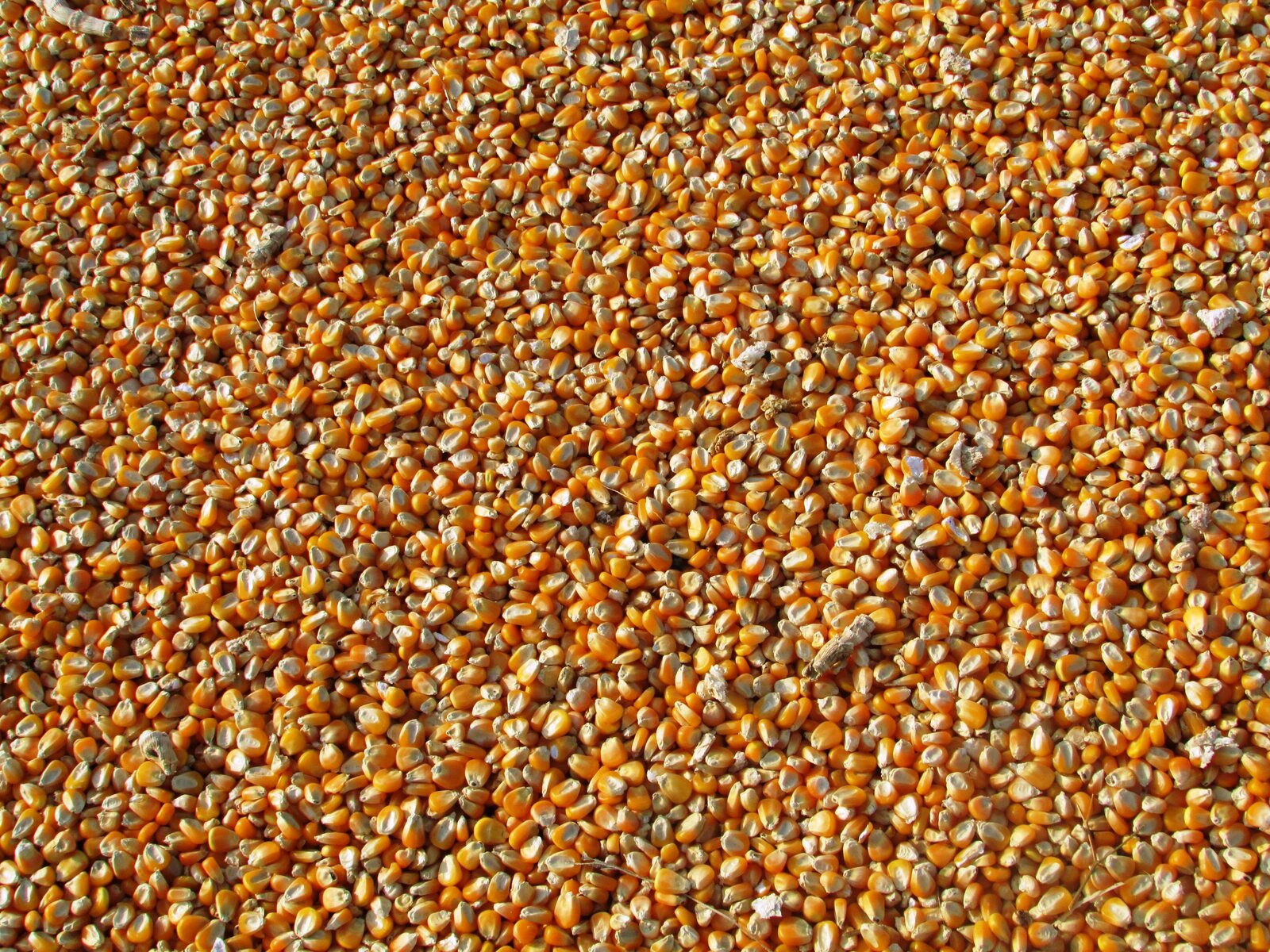
The trouble with stored corn is water. Damp corn grows mold, and some of those molds make aflatoxin, a poison that builds up in the grain. Deer tolerate some of it. Turkeys, songbirds and small animals that pick at the same pile do not, and it can come from corn that looked fine in the bag.
- Keep it dry. Galvanized cans with tight lids, up off a concrete floor on a pallet so they do not sweat underneath.
- Buy what you will use in a few weeks, not a season’s worth at once.
- Look and smell before you pour. Clumped, dusty, discolored or musty corn goes in the trash, not the feeder.
- Clean the feeder. Old corn caked in the bottom of a hopper molds and contaminates every fresh bag poured on top of it.
- Watch for rodents in the shed. Mice and rats in the feed bring snakes in after them.
Firewood: Stacking It So It Burns
Wood that sits in a pile on the ground at a camp for a year is mostly wet and rotten by the time anyone goes to burn it.
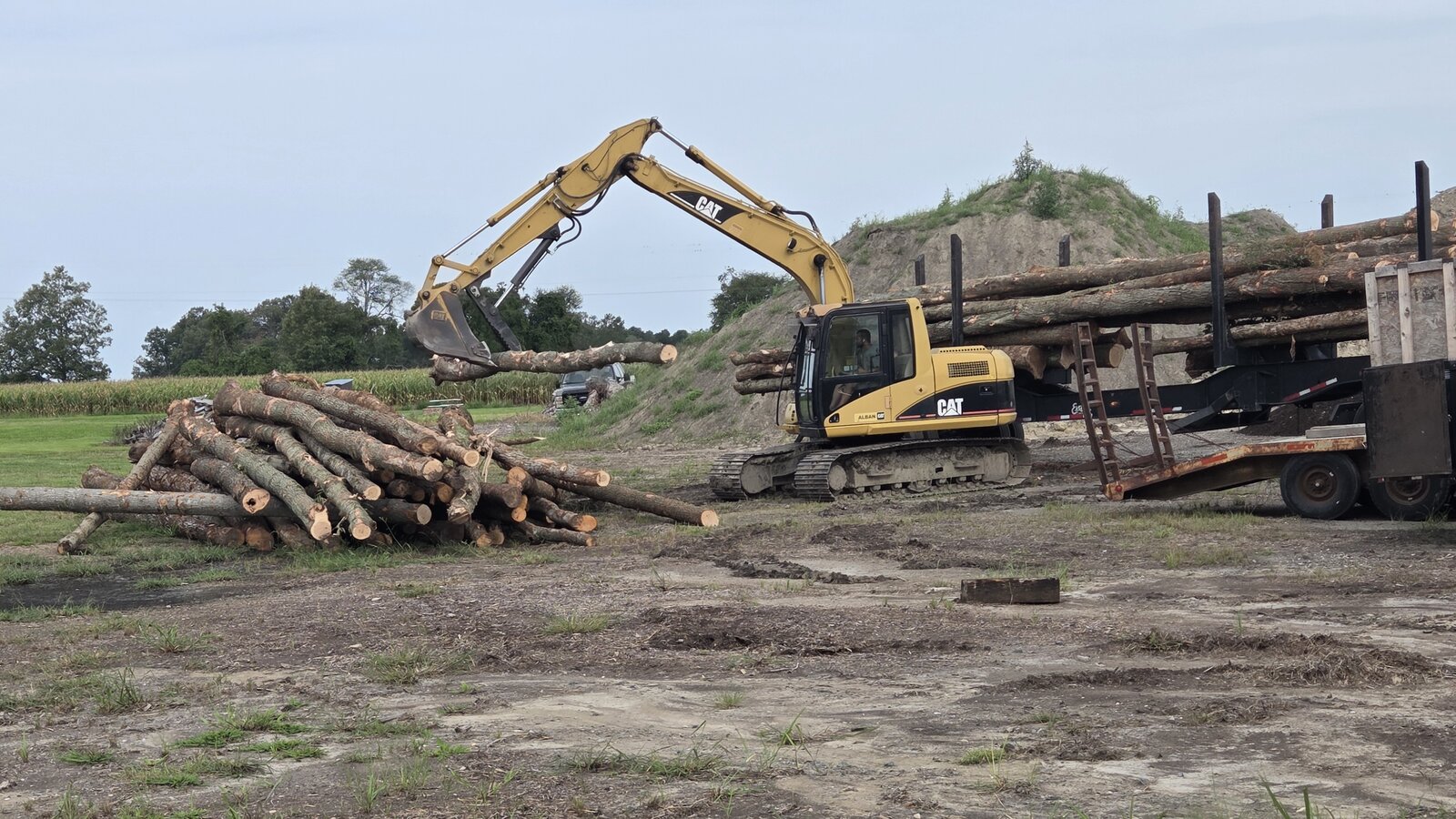
- Split it before you stack it. Split wood dries many times faster than rounds.
- Get it off the ground. Pallets or a pair of rails keep the bottom row out of the wet and let air under the stack.
- Cover the top, leave the sides open. A tarp over the whole stack holds the moisture in. A roof or a strip of tin over the top keeps rain off and lets wind dry it.
- Keep the main stack away from the cabin. A stack against the wall brings termites, carpenter ants and mice right up to the house. Keep a few days’ worth by the door and the rest out by the shed.
- Give it time. Hardwood split in spring is ready by the following fall or winter. Fresh-cut wood smokes up the stove and coats the chimney.
- Burn wood from near the camp. We deliver seasoned Eastern Shore hardwood when it is in stock. Moving firewood long distances is how tree pests like the emerald ash borer get into new woods.
Before Storm Season
The camp that comes through a storm in good shape is usually the one that was looked over before it.
- Limbs over the roof and the lane. Dead and leaning trees, and the big limbs hanging over the cabin, come down first in a blow. Loblolly pines snap high in the wind and in ice storms.
- Ditches and culverts on the lane. A clogged culvert sends water over the lane instead of under it, and one heavy rain can cut a lane in two. Ditches that have filled in get dug back out.
- Things that blow. Blind panels, tree stands, boats, deer carts, anything stored loose outside.
- Water lines. Pipes in an unheated camp that are not drained before a hard freeze split, and nobody finds out until the next visit.
After a Storm, a Flood or a Snow
This is where an empty camp suffers. A tree across the lane is an afternoon with a saw. A tree on the roof that nobody sees for six weeks is rotted decking, wet insulation and a ceiling to replace.
What we look for on a check after a storm:
- Fallen timber. Trees and limbs across the lane, on the cabin, the shed, the fences and the blinds. Cut up, chipped or hauled off, so the lane is open when you come down.
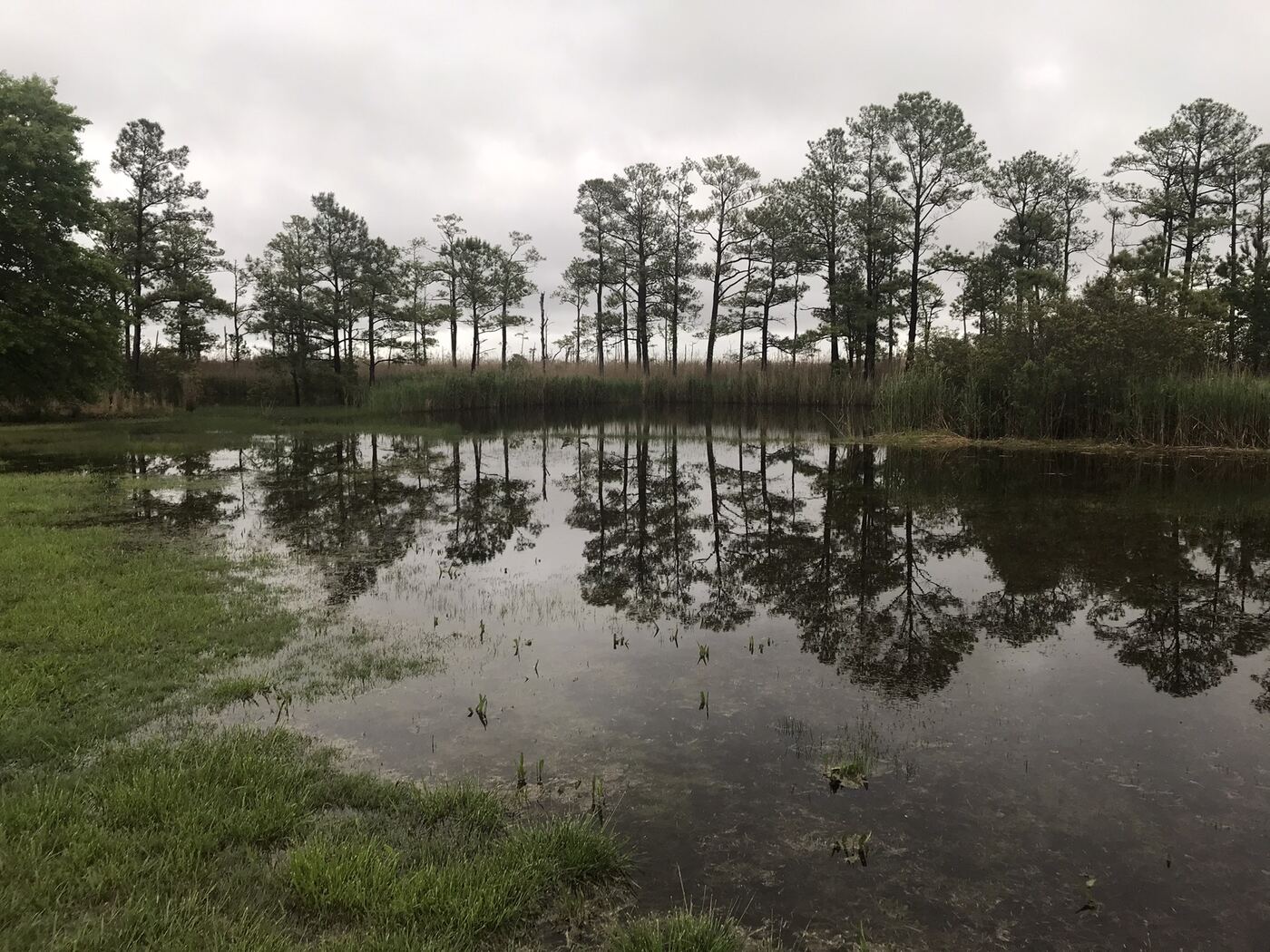
- Water. How high it got, what it moved, debris along the shoreline and the field edges, and whether the culverts and ditches are carrying it off again.
- The roof and the outside of the cabin. Shingles, gutters, anything torn loose.
- Snow and ice. Heavy wet snow bends pines over the lane and loads up roofs and blind covers. Ice brings down limbs that looked sound in the fall.
A year-round maintenance plan puts those checks on the calendar along with the regular work: an opening visit before your first weekend, a closing visit after your last, and somebody driving in after a storm, a flood or a snow to look the place over and clear what came down. For bigger messes we handle storm cleanup on its own.
A Year at the Camp
The work falls about the same way every year on the Shore:
| When | The work |
|---|---|
| Jan to Feb | Checks after storms and snow, limbs off the lane, wood restocked at the cabin for the late season |
| Mar to Apr | Opening visit: ruts and ditches on the lane, first mowing, phragmites checked along the ditches, ponds and edges walked |
| May to Jun | Grass around the cabin, buffers along the water left to grow, trails cut back |
| Jul to Aug | Fields and edges bush hogged, ground worked up for the fall plots |
| Aug to Sep | Brassica plots planted, about two months ahead of the first frost; phragmites treated from mid-August while it is still green |
| Sep to Oct | Wheat, oats and clover planted; blind panels built and set, blinds re-dressed |
| Oct to Dec | The season: lanes kept passable, quick fixes between hunts, the closing visit after the last weekend |
Keeping It Ready
The whole point of a camp is that you pull in and it is ready: the lane is open, the blinds are set, the wood is dry and nothing came through the roof while you were gone. Everything we keep up on a camp is on our camp maintenance page. Tell us where the camp is and when you use it, and we will set the work around your seasons. Call (443) 205-4415 or send the estimate form.
Sources
- Maryland DNR, Other Deer Hunting Regulations (baiting) and Chronic Wasting Disease in Maryland
- Maryland DNR, Deer Hunting: A Valuable Management Tool for Private Landowners
- Delaware DNREC, Chronic Wasting Disease
- Virginia DWR, Feeding Deer
- Mississippi State University, Supplemental feeding and chronic wasting disease
- Mississippi State University Extension, Deer Food Plot Planting Guide for the Southeast
- Oklahoma State University Extension, Aflatoxins in Wildlife Feed