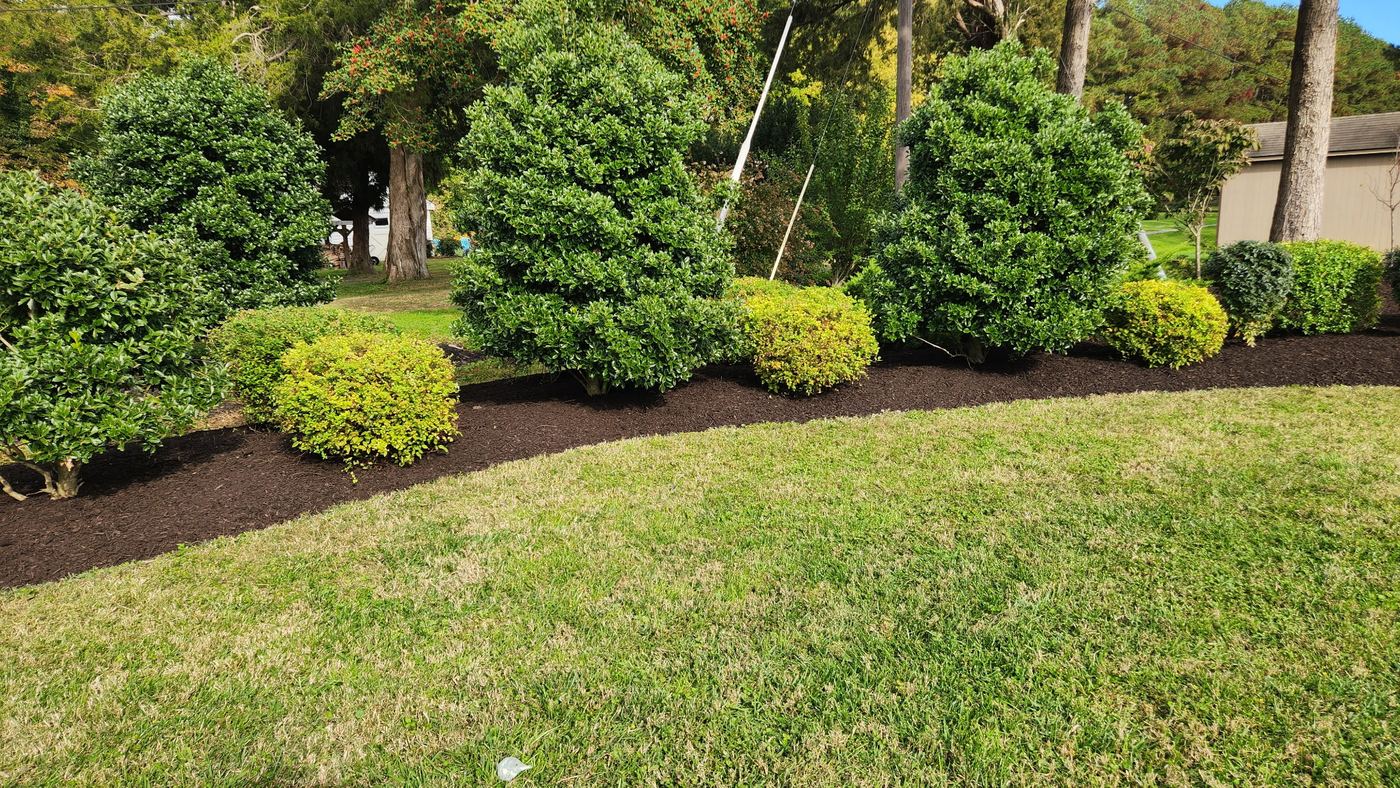
Our crews spent the end of October mulching beds, with the maples turning red over the work. Spring gets all the attention for mulch, and spring mulch is a good thing. Fall mulch does a different job, and on the Eastern Shore it lines up with three things that are all happening in the yard right now.
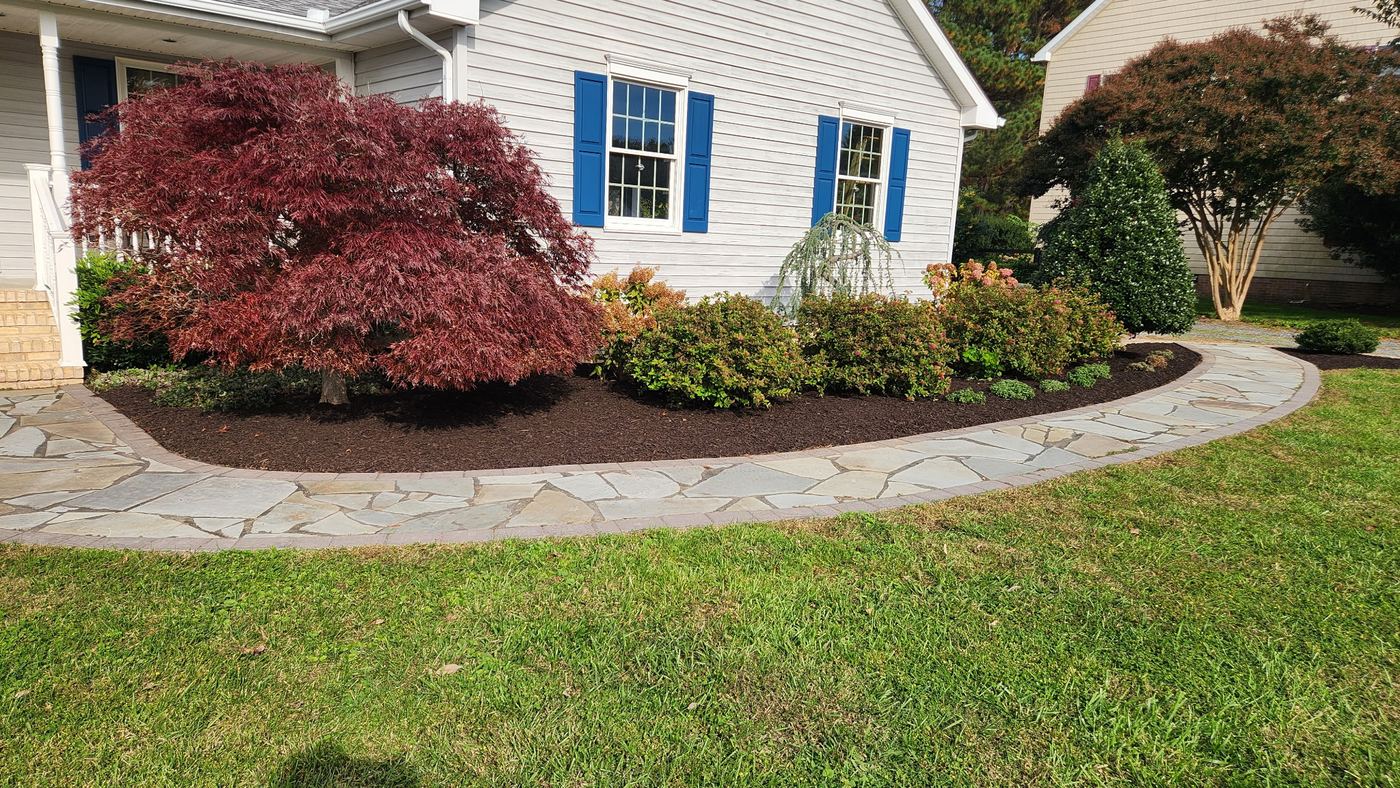
The roots are still growing
When the leaves drop, the top of a shrub or tree stops for the year. The roots keep going. They grow whenever the soil is above roughly 40 degrees, and soil cools much more slowly than the air does. On the Shore, with the Bay holding warmth into the late fall, the ground often stays above that mark into December.
That makes fall the season when shrubs and trees put on root, especially anything planted this year. A fresh layer of mulch keeps that soil a little warmer through cold nights and holds the moisture in, so the roots get a few more weeks of growing before they shut down.
Shore winters thaw as often as they freeze
Winters here are softened by the water. Instead of freezing hard in December and staying frozen until March, the ground freezes on a cold night and thaws the next sunny afternoon, over and over. Each freeze swells the wet soil a little and each thaw lets it settle, and that back and forth can lift shallow roots, small perennials and young shrubs right up out of the ground. Gardeners call it frost heave. Bare soil swings the most because nothing is shading it from the afternoon sun or covering it from the night air.
Two to three inches of mulch evens those swings out. The soil under it still gets cold, but it changes temperature slowly, so it goes through far fewer freeze and thaw cycles in a winter.
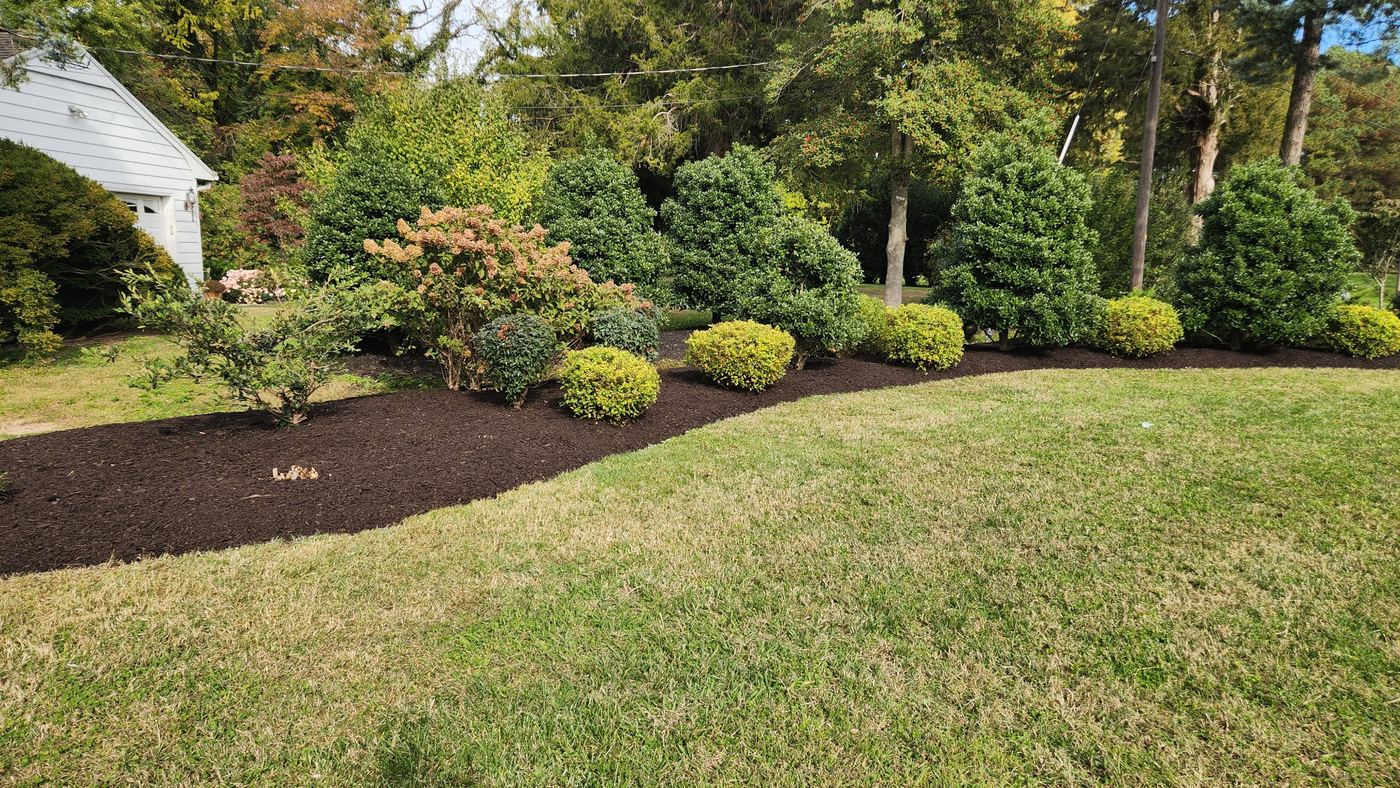
The winter weeds come up in the fall
Henbit, chickweed and hairy bittercress are winter annuals. Their seeds sprout in the fall, the seedlings sit low and green through the winter, and they flower and drop new seed in early spring, usually before anyone is out in the beds. By the time spring cleanup comes around they have already gone to seed.
They need light to get started. A fresh layer of mulch over the soil in late fall covers the seeds that are about to sprout, so fewer of them make it to spring.
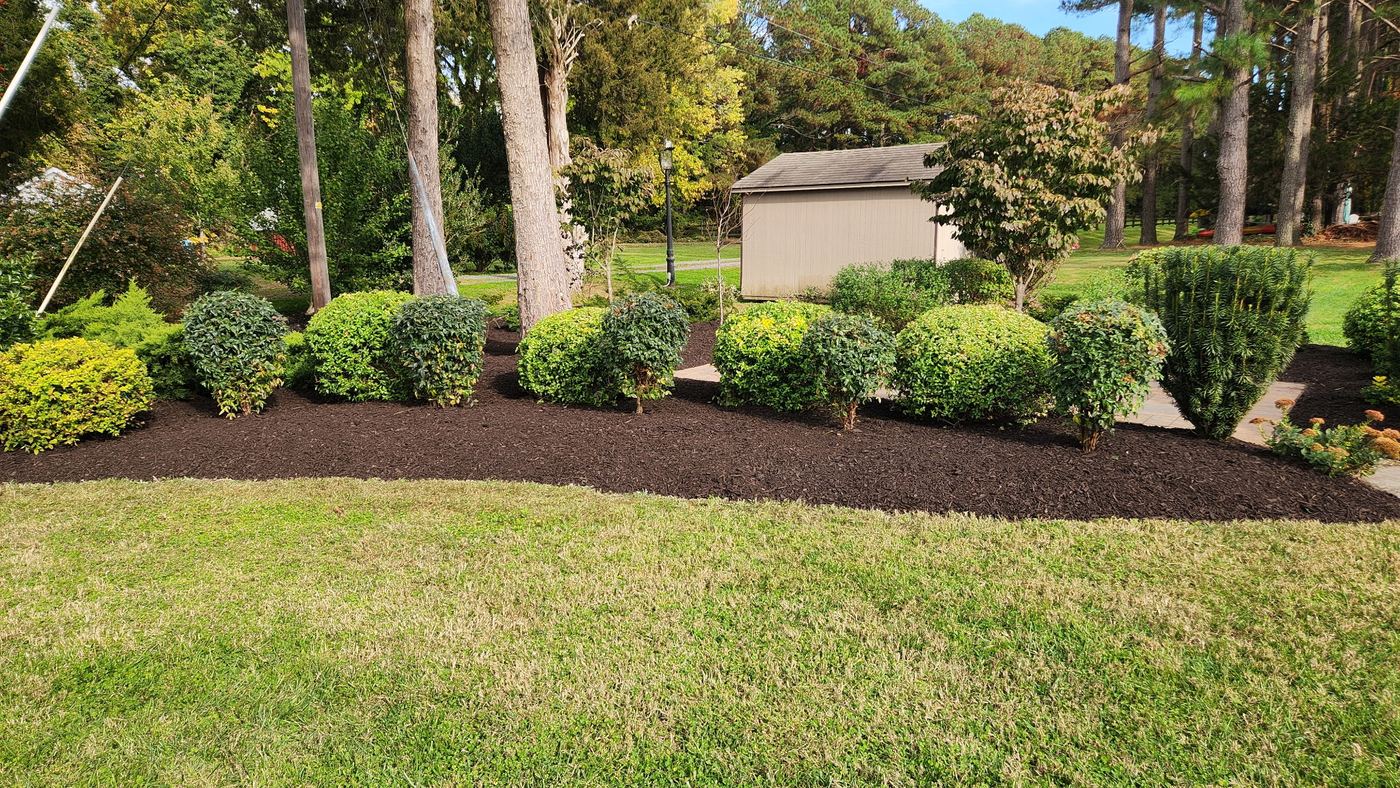
Leaves off first, then mulch
Mulch goes down after the beds are cleaned out. Wet whole leaves left in a bed pack into flat mats that hold water against plant crowns and keep air out of the soil, and putting mulch on top of them seals that in. So the order is leaves out, beds edged, then mulch. That is how our fall cleanups run, with mulch as the last step.
Chopped leaves are another matter. Run over with a mower, they break down quickly and can stay in the beds as a light layer under the mulch.
How much to put down
The target is two to three inches total, counting whatever is already there. A bed that was mulched in the spring may only need a light top layer, or the old mulch raked up and turned to freshen it. Adding a full layer every season without checking builds a bed up to four or five inches, which starves the roots of air.
Keep it off the trunks and stems. Pull it back a few inches from every trunk, shrub base and perennial crown. Mulch piled up against bark holds water there and invites rot and insects. Our mulch installation page goes through depth, edging and the trunk clearance in more detail.
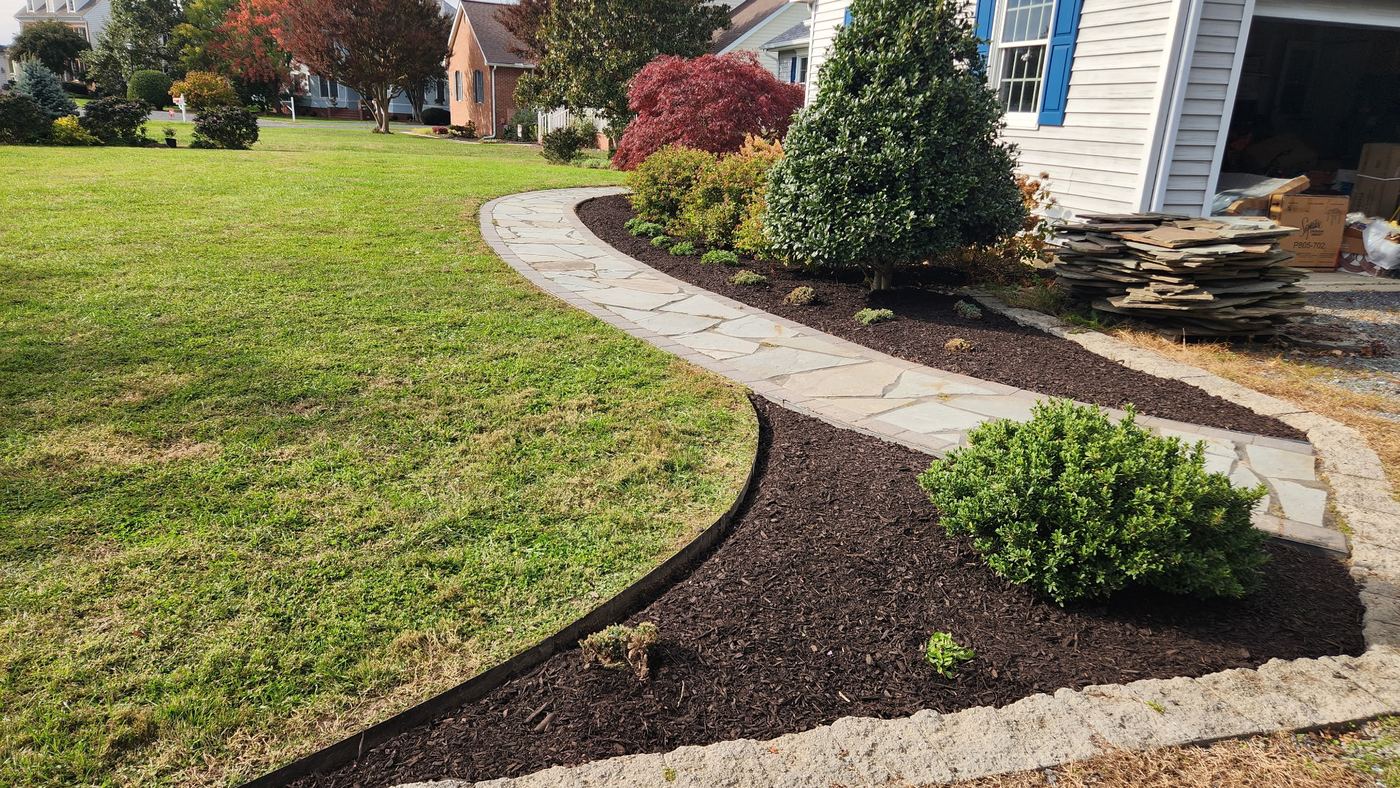
Ready before spring
A bed mulched in November starts spring already done. It needs a quick look and maybe a light refresh, not a full job at the busiest time of the year. If you would rather have the material delivered and spread it yourself, we do bulk mulch delivery by the yard, and a lot of our mulch comes from our own work.
If you want your beds cleaned out and mulched before winter, send us the details or call (443) 205-4415. We do fall cleanups, mulch installation and landscape bed maintenance across the Eastern Shore.