Almost every driveway conversation we have starts the same way. Somebody wants to know which material to use. Stone, millings, concrete, pavers. It is a fair question, but it is the second question. The first one is what is going underneath, because on the Eastern Shore the base is what decides whether a drive lasts fifteen years or two.
Once the base is settled, the surface choice is mostly about how the drive gets used and what you want it to look like. Here is how we sort it out.
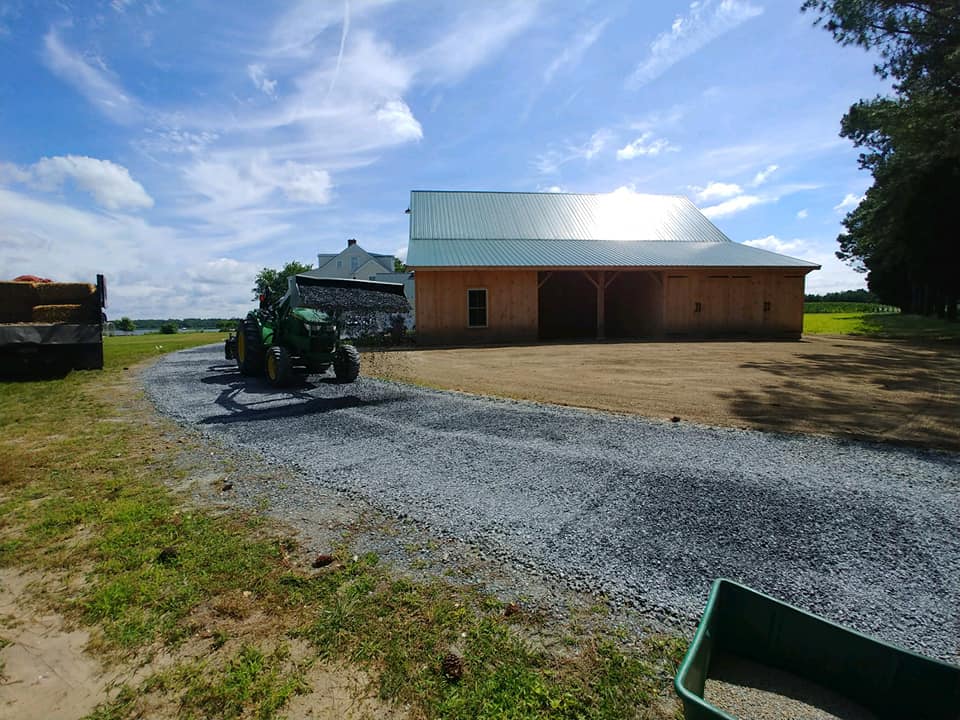
The Part Nobody Sees
Delmarva soil is sandy loam over a high water table, and our winters cycle above and below freezing all season instead of staying frozen. Those two facts drive every failure we get called out to look at. Water gets into an uncompacted base, freezes, lifts the surface, thaws, and drops it back somewhere slightly different. Do that fifty times a winter for a few years and a driveway either potholes, ruts, or cracks depending on what is on top.
A proper install means stripping the topsoil and organic material out (soft ground under a drive never stops moving), cutting to depth, compacting the subgrade, and setting the grade with a crown or a cross slope so water sheds off instead of sitting. On soft or wet ground we put down a woven geotextile fabric, which is a sheet of engineered filter cloth that separates stone from soil. Without it the stone slowly disappears down into the mud and you are back to buying material every couple of years. Fabric is cheap compared to re-stoning a lane twice.
Then the drainage. If a driveway sheds its water into a spot with nowhere to go, it will eat its own edges. That side of the work runs through excavating and grading.
Crush Run
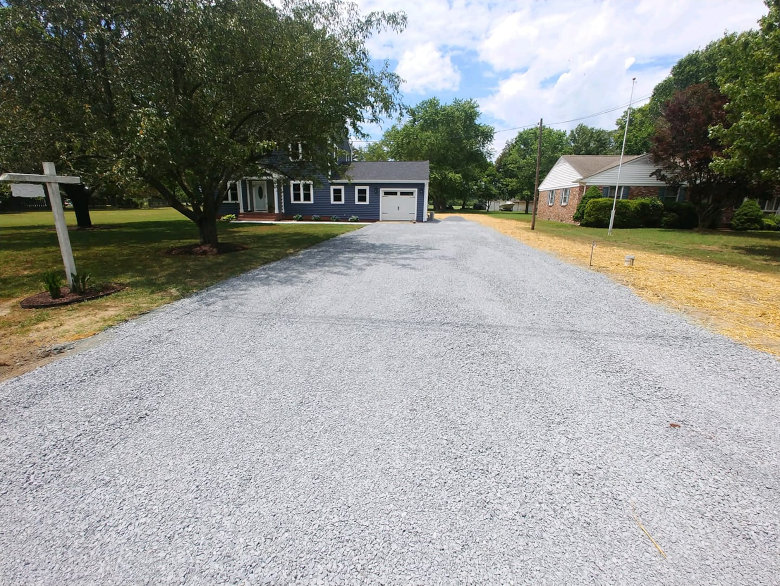
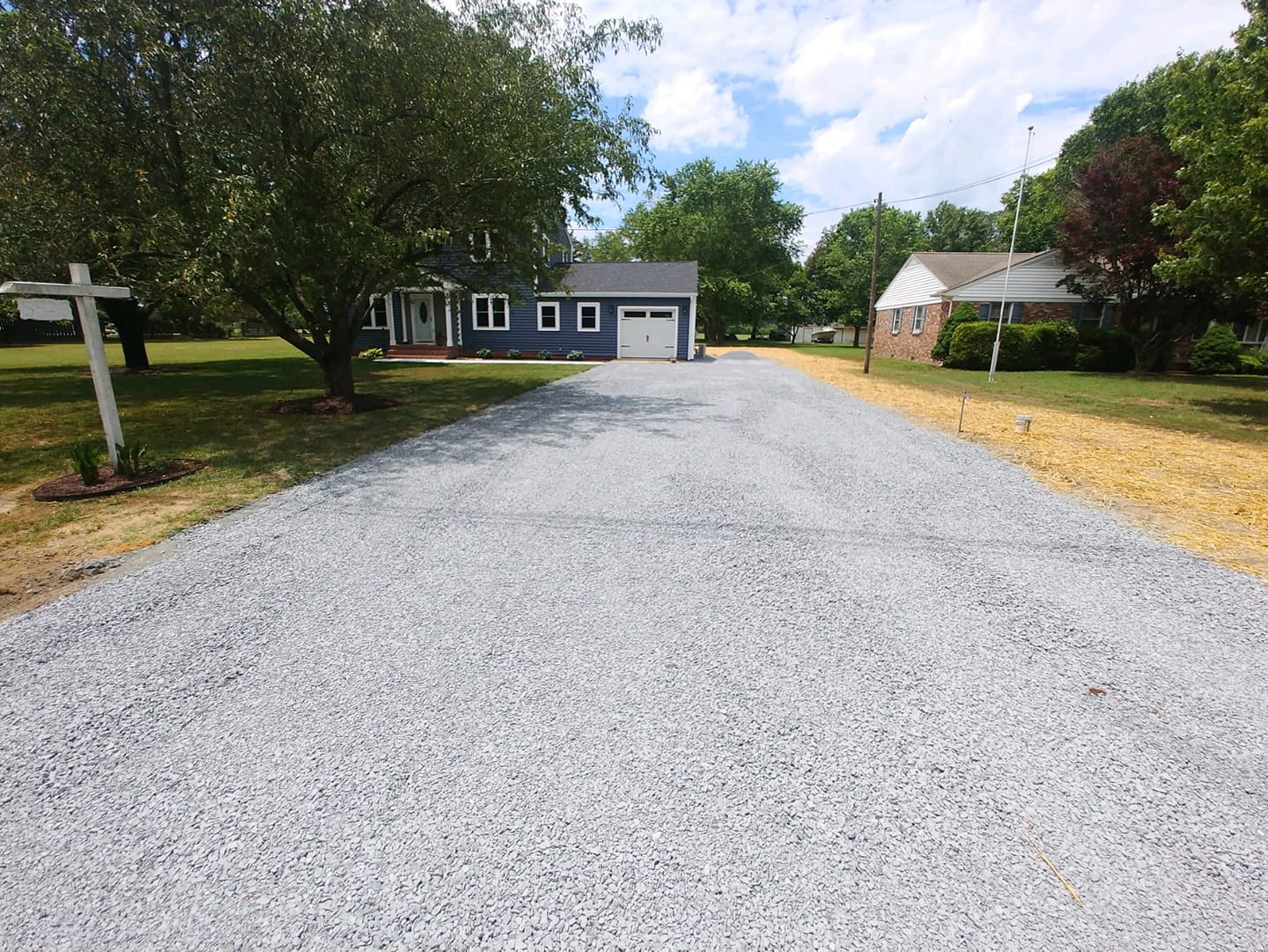
Crush run is the workhorse and it is what most gravel drives on the Shore should be built out of. It is crushed stone with the fines left in, so it has angular pieces that lock together plus dust that binds them. Compact it and it sets up close to a solid surface that still drains.
Use it for residential driveways, farm lanes, parking pads, and as the base course under asphalt or pavers. Four inches of compacted crush run is a normal residential surface. Six inches is a base under a paved surface. Eight or more is what we spec for farm roads and anything carrying loaded trucks, tractors, or equipment trailers.
The one thing crush run asks for is a rake and a regrade every few years. That is the tradeoff for a surface that costs a fraction of paving and can be repaired with a bucket of material instead of a contractor.
Millings
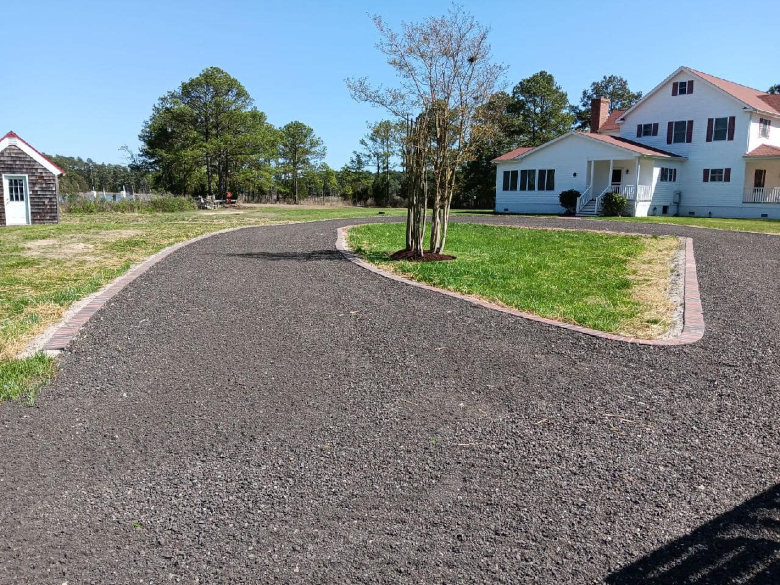
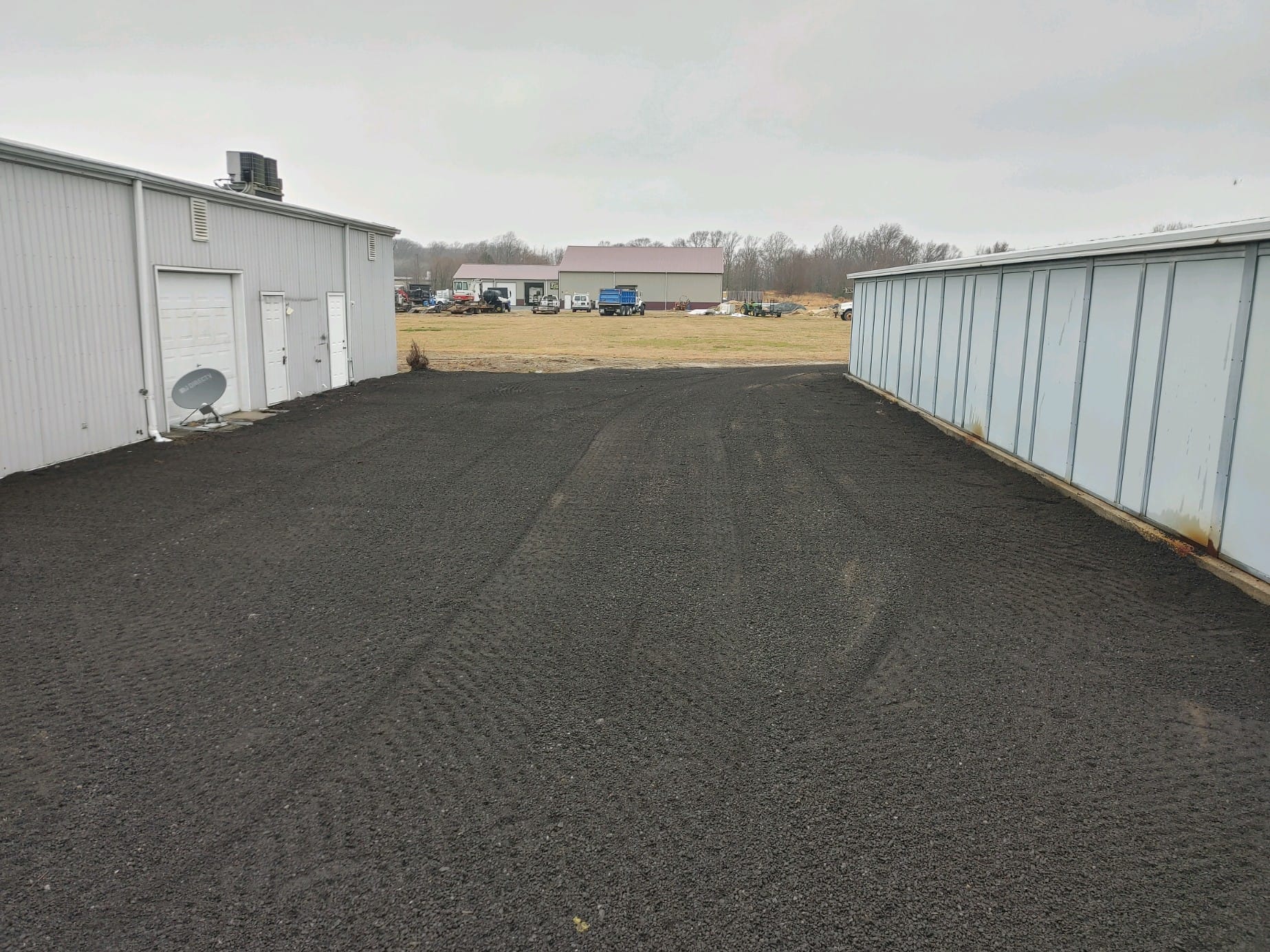
Recycled asphalt millings are ground-up old road surface. On long farm lanes and working driveways they are the best cost per ton on the Shore, and they behave differently than stone: the asphalt binder is still in the material, so summer heat and traffic knit millings into a semi-solid surface over a season or two. Once they set up they shed water well and hold a shape that stone alone will not.
Millings are the right call for long agricultural entrances, equipment yards, storage lots, and any drive where you want something firmer than gravel without the price of paving. They are dark, so they read closer to asphalt than to a stone drive, which some people want and some people do not.
Two realistic limits. Millings need traffic and warmth to lock up, so a lane nobody drives stays loose longer. And they want the same compacted base as anything else. Dumped on soft ground they rut like everything else.
Washed Stone, Pea Gravel, and Screenings
These three come up constantly and get misused about as often.
#57 washed stone is clean angular stone with the fines washed out. It does not compact, which is the entire point: the voids stay open so water moves through it. That makes it right for French drains, pipe bedding, dry wells, and drainage beds. People do use it as a decorative driveway surface for the loose, chunky look, and it works, but understand that it will always shift under tires and migrate toward the edges.
Pea gravel is rounded and small. Good for garden paths and borders, poor for driveways. Round stone rolls instead of locking.
Screenings are stone dust and fines. They compact tight and smooth, which makes them the standard setting bed under pavers and flagstone and a nice finish layer on a footpath. Not a driveway surface on their own.
Parking Pads, Lots, and Access Roads
The material logic is the same. What changes is depth and edges.
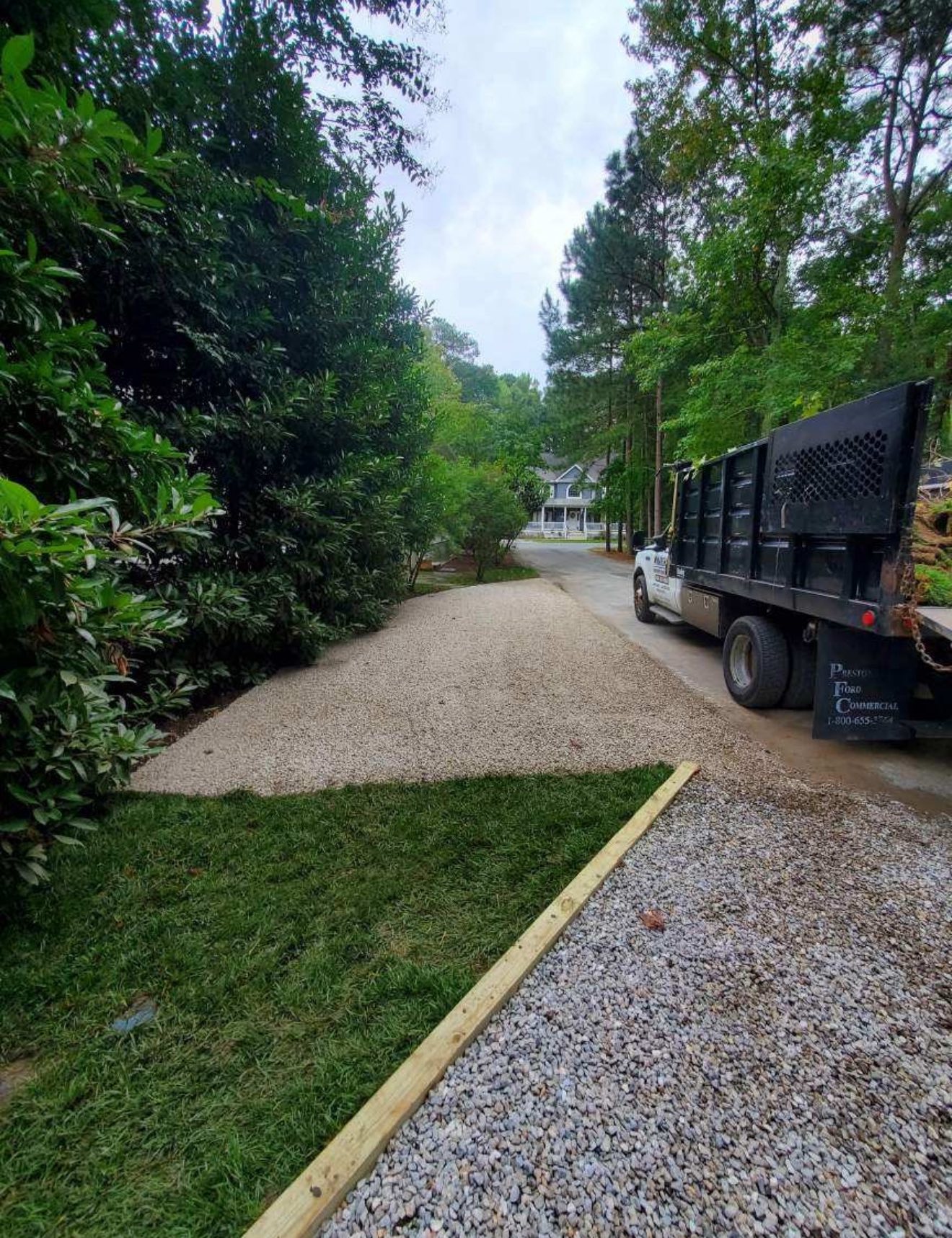
A parking pad off an existing drive is usually 4 to 6 inches of crush run over compacted subgrade, sized so vehicle doors open onto surface instead of grass. The failure mode on pads is not the middle, it is the perimeter, where stone spreads out and thins under the same tire path used every day. Edging (timber, steel, block, or a poured curb) is what keeps the material where you put it.
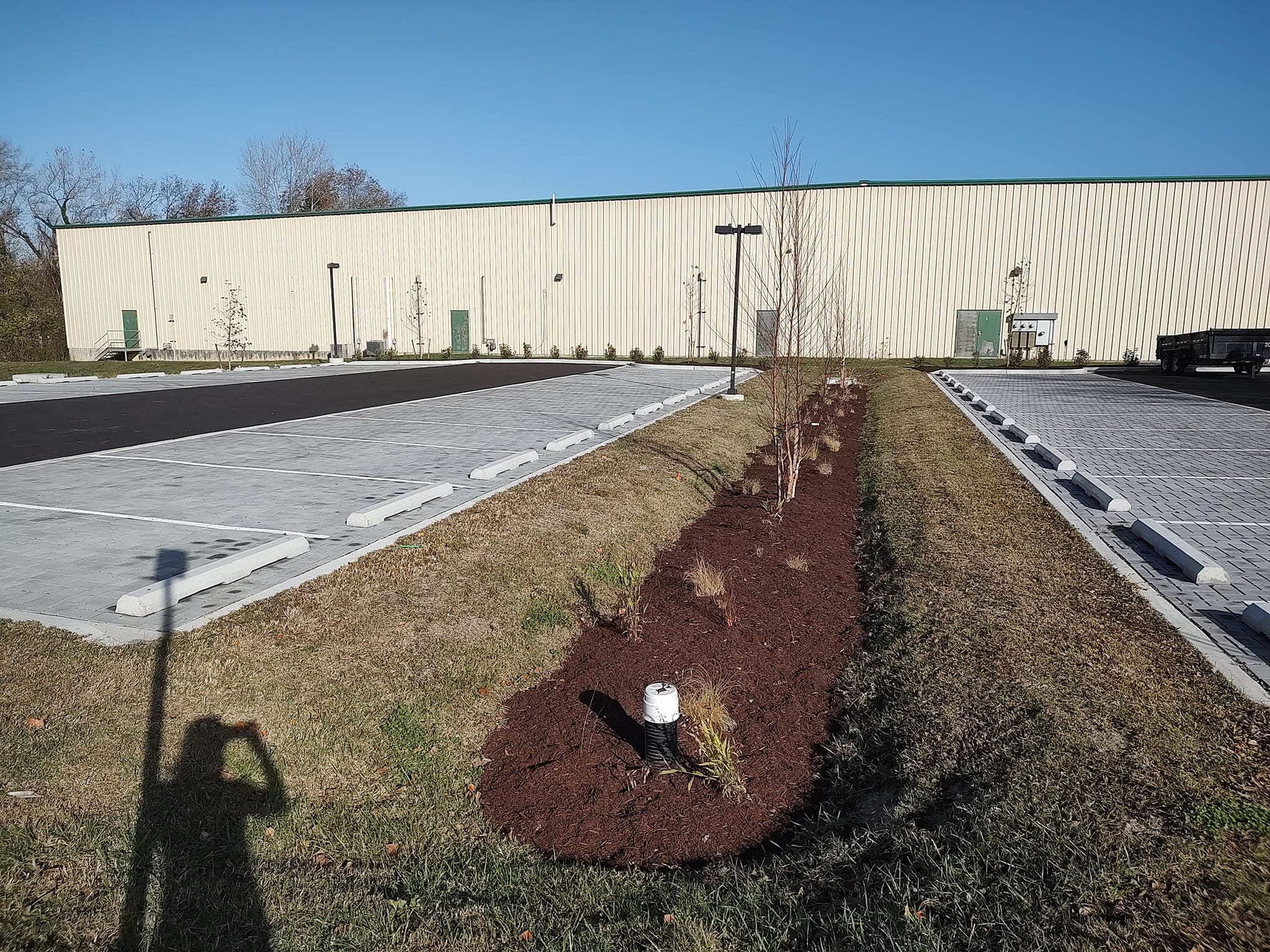
Commercial and storage lots need the surface engineered around traffic pattern and turning radius. Loaded trucks turning in place tear a surface far harder than the same trucks driving straight across it, so the thickness goes where the turning happens.
Farm and access roads are their own animal: long, low traffic, but the loads are heavy and the ground is often wet. That combination is exactly what geotextile fabric and a thicker crush run or millings section are for. Add a crowned center so water runs off both sides, and ditch or pipe the low spots. A farm lane that holds water in one soft spot will fail in that spot every single spring no matter how much stone you keep hauling to it.
Pavers, Brick, and Concrete
When a drive is the front of the house, the conversation shifts to hardscape.
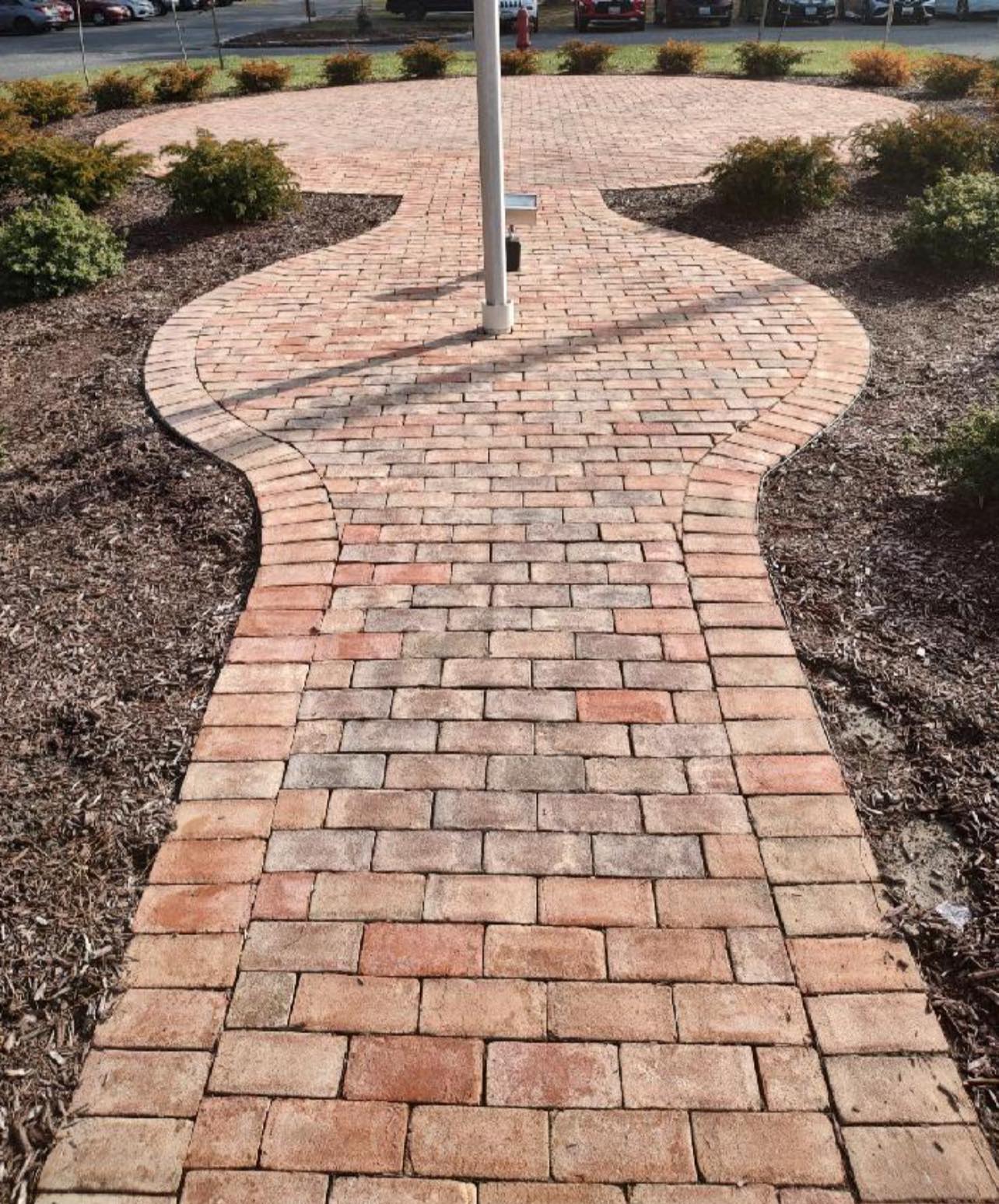
Pavers and brick are the surface we recommend most often for formal drives, aprons, and pads on the Shore, and the reason is freeze-thaw. Segmental paving flexes with ground movement instead of cracking against it, and if a section ever does settle, the units come up, the base gets corrected, and they go back down. There is no demolition and no color-mismatched patch. A proper paver drive is a deep build: 8 to 12 inches of compacted base for vehicle loads, a screeded bedding layer, the units, then joint sand and edge restraint. Skip the edge restraint and the field spreads.
Concrete gives a clean formal surface and a long life when the base is right, but it is a rigid slab in a climate that moves. It cracks where it wants to unless control joints are cut where they belong and water is kept out from under it. Full detail on how we handle failing slabs is in the concrete repair and replacement post.
A common middle path: a stone or millings drive with a paver apron at the road and a paver pad at the house. You get the appearance where it is seen and the cost per square foot where it is not.
Rough Numbers
Aggregate is sold by the ton. Crush run and millings run about 1.35 to 1.43 tons per cubic yard. To size an order, multiply length by width by depth in feet, divide by 27 for cubic yards, then convert.
For a quick sanity check, one ton of crush run covers roughly 50 square feet at 4 inches deep. A 100 foot by 12 foot driveway at 4 inches is about 15 yards, call it 20 tons. Add 10 percent for compaction and irregular edges, and round up. A half ton over costs less than a second delivery.
The aggregate delivery page has the full material list and a calculator that runs these numbers for you.
What We Would Ask You
When someone calls about a drive, these are the questions that actually determine the answer. What is driving on it and how heavy is it. How long is the run and does it hold water anywhere. Is this the front of the house or the way to the barn. What is under it now, and is there an old failed surface that has to come out first. How much regrading are you willing to do later, because that is the real difference between a stone drive and a paved one.
Answer those and the material picks itself.
Marshall Property Management. Cambridge, Maryland. Driveways, parking pads, lots, farm roads, and hardscape surfaces built across the full Delmarva Peninsula. Maryland’s Eastern Shore, Delaware’s Sussex and Kent Counties, Virginia’s Accomack and Northampton Counties.
Driveway Installation · Aggregate Delivery · Hardscaping · Excavating · Request a Free Estimate or call (443) 205-4415