Most of the cracked patios and heaving driveways we get called out to look at on the Eastern Shore did not fail because of bad concrete. They failed because of what was happening underneath the concrete, and because of the way Shore winters work on it season after season. Before we quote a repair or a replacement, that is the first thing we figure out: is the surface the problem, or is the ground?
Why Shore Concrete Cracks
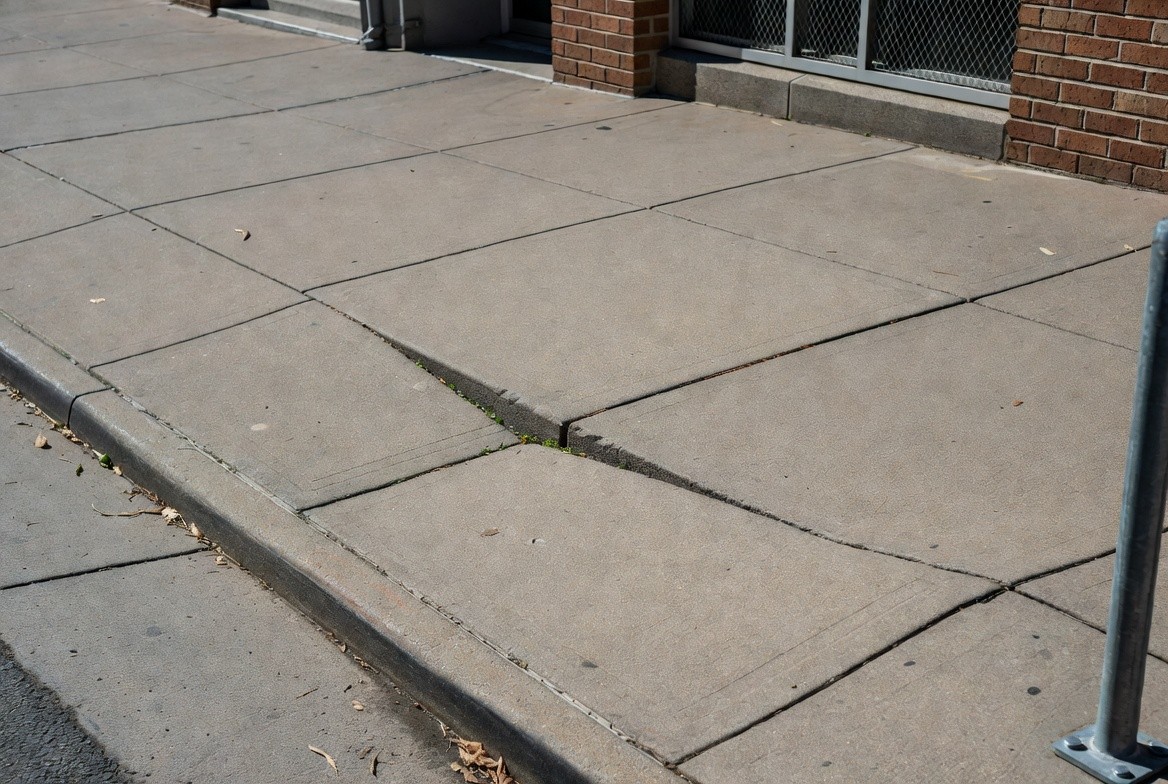
Our winters are not the deep, stay-frozen kind. They cycle. Temperatures drop below freezing and climb back above it, sometimes several times in a single week. Water works its way into concrete through hairline cracks and control joints, freezes, expands, then thaws and settles back slightly out of position. One cycle does nothing you would notice. A few hundred cycles over five or six winters fractures a slab from the inside out.
That is the pattern behind almost everything we see: patios lifting at the joints, driveway edges crumbling where the base support is thinnest, and walkway sections that have risen or dropped enough to catch a toe. The concrete is the visible casualty. The freeze-thaw cycle is the cause.
Repair or Replace: How We Decide
There is no single answer, and anyone who quotes you a replacement without looking underneath is guessing. We walk the slab and look at a few things.
The extent of the cracking. A handful of cracks in an otherwise sound slab is a repair-and-seal candidate. Map cracking across the whole surface, where the concrete looks like a dry lakebed, usually means the slab is failing as a unit and patching it just buys a season or two.
What the base is doing. This is the one that matters most. If a slab is heaving or settling unevenly, the trouble is in the gravel and soil beneath it, not the concrete on top. Pouring new concrete over a base that has never been corrected gives you a new slab that fails on the same schedule as the old one. When we find that, we say so, because the honest answer is sometimes the more expensive one.
Where the water goes. Concrete that fails repeatedly almost always has a drainage problem feeding it. We look at grade and runoff during the assessment, because fixing the slab without fixing the water just resets the clock.
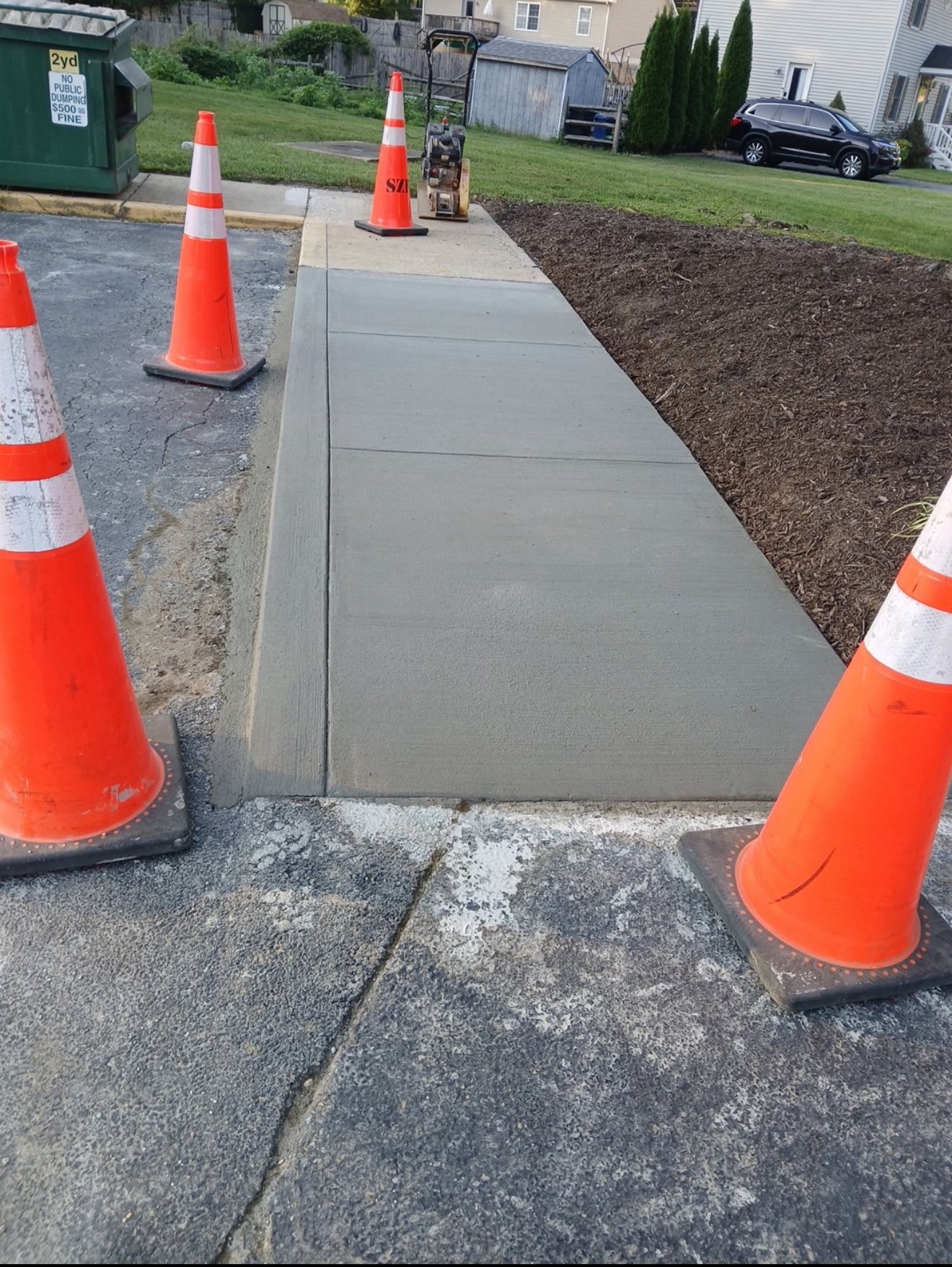
When the base is sound and the damage is localized, repair is the right call: crack repair and sealing, grinding a lifted section flat, or replacing a single failed panel rather than the whole run. When the base has failed, full removal and a proper rebuild is the more economical answer over any real timeframe, even though it costs more up front. We lay out both options with what each one actually buys you, then let you decide.
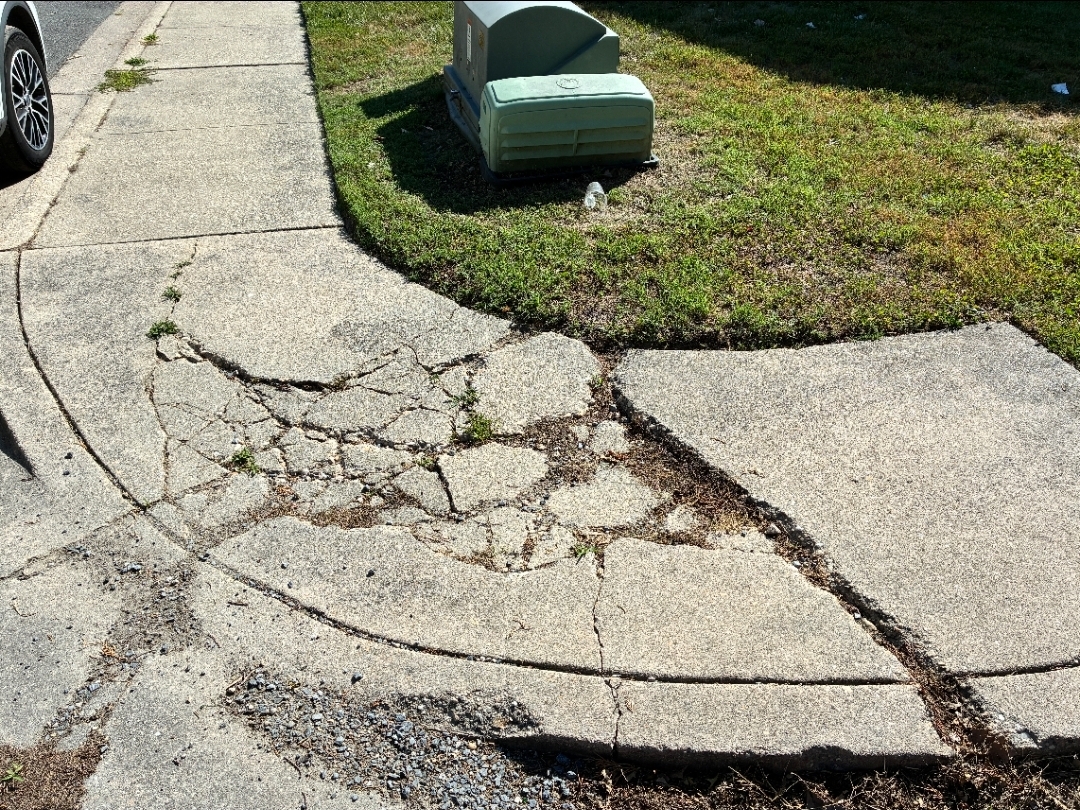
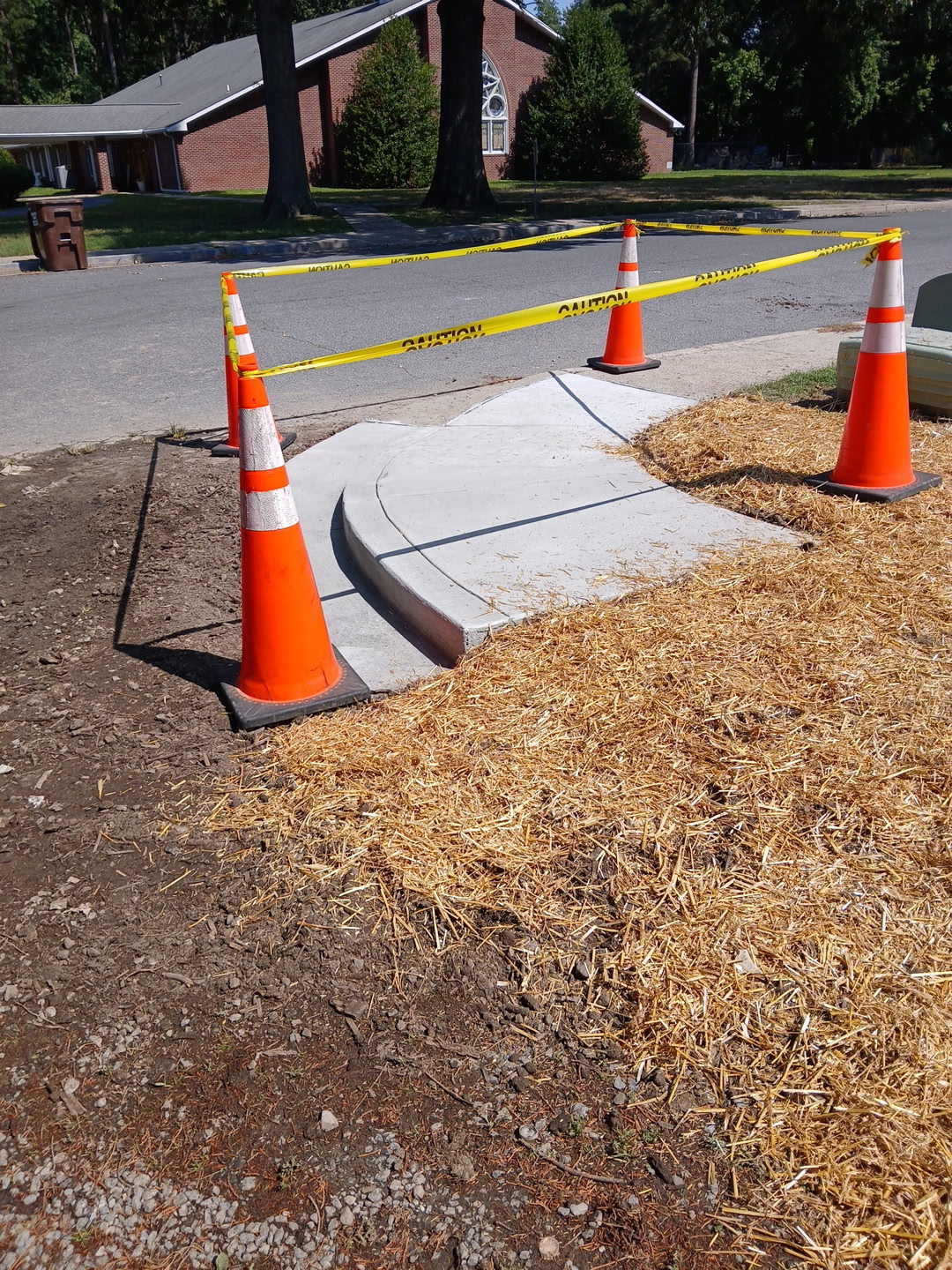
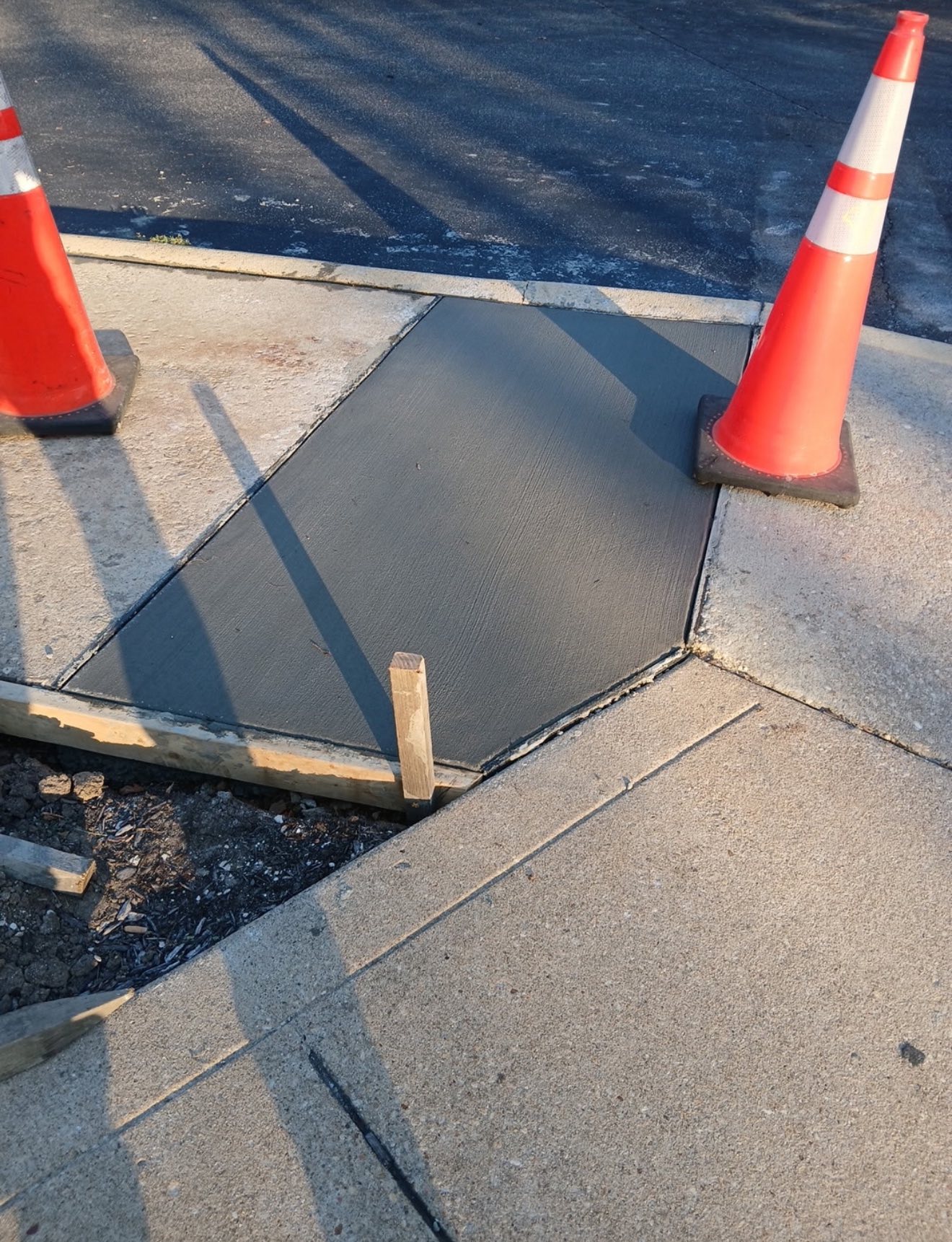
The walkway below was a replace. Map cracking ran across the whole surface and the sections had heaved out of line, which meant the slab had failed as a unit and the ground under it needed correcting, not another pour on top of the same problem. We removed it, rebuilt the base, repoured the section, and strawed the disturbed ground back in.
Patios and Sidewalks Specifically
Patios take the freeze-thaw beating harder than most surfaces because they sit flat, hold water at the joints, and rarely get the base prep a driveway gets. Frost heave lifts slabs unevenly, cracks open at the control joints, and the surface starts shedding. For a patio that is structurally sound but tired, leveling and sealing can extend its life several years. For one that has heaved and cracked through, replacement with proper base prep and drainage is what stops the cycle.
It is also the moment to think about whether poured concrete is even what you want going back in. A lot of the patio work we do now is paver and stone hardscape rather than a single poured slab, because segmental work flexes with ground movement instead of cracking against it, and a failed unit can be reset rather than demolished. If you are already tearing out a slab, see hardscaping before you commit to pouring another one.
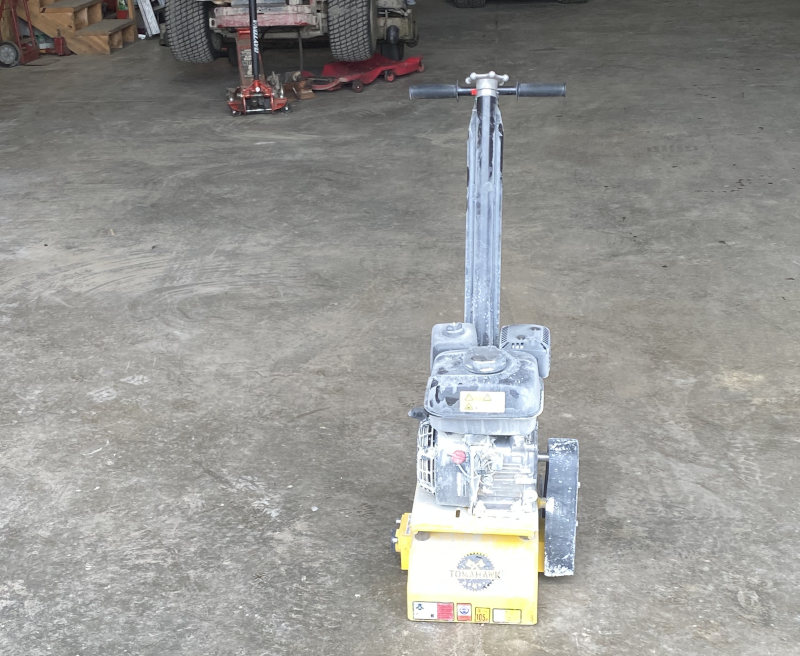
Sidewalks and walkways fail differently, but for the same underlying reason. Because they run in poured sections, freeze-thaw lifts and drops individual panels out of line with each other, and it takes only a half inch of rise at a joint to turn a walk into a trip hazard. On a rental, an HOA common path, or any walk the public uses, that is a liability question as much as an appearance one. The upside is that the sectioned layout usually lets us work panel by panel. When the base underneath is still sound, we can grind a lifted panel flush with the one beside it and take the trip hazard out without pouring anything. We run our own concrete grinder for exactly this, which is often the difference between a same-day fix and a full section replacement. When several panels in a row have failed together, that is the base telling us the stretch needs to come out and go back down over corrected ground.
What Proper Concrete Work Requires
The difference between concrete that lasts twenty years and concrete that is crumbling at five is rarely the mix. It is the base preparation and the drainage planning. That means excavating to proper depth, a compacted gravel base that drains, control joints cut where they belong, and grade that moves water away from the slab and away from the house. We handle the excavating and drainage side ourselves, which is why we can stand behind the surface we put down: we built what is under it.
The same logic carries over to driveway installation, where base failure shows up as edge crumbling and center cracking, and the fix is almost always underneath.
If you have a patio, driveway, or walkway that is cracking, heaving, or turning into a trip hazard, we will tell you honestly whether it is a repair or a replacement before any work starts. Full details on our concrete repair and replacement service. We serve the Delmarva Peninsula across Maryland, Delaware, and Virginia. Request a free estimate or call (443) 205-4415 to schedule a site visit.